Whale Watching Cabo San Lucas: Season, Rules and Boats
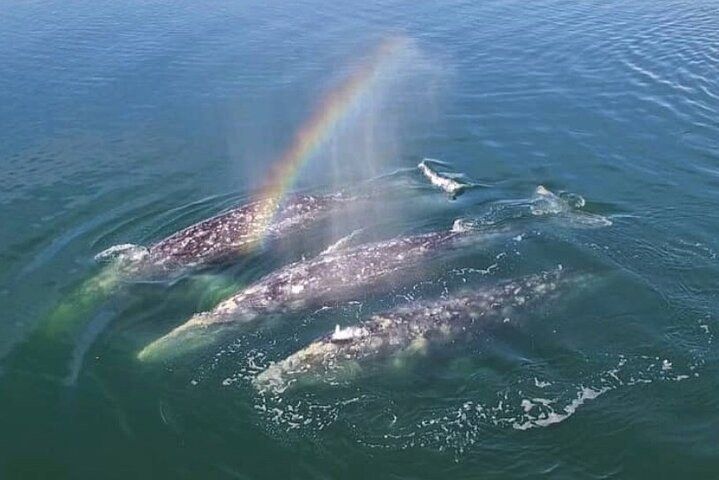
Dates here come from a federal notice signed in Mexico City on 22 October 2026, which authorizes the season in the Cabo San Lucas area from 15 December 2026 to 30 April 2027, with the peak from January to March. Humpback and gray whales are the species most commonly seen here, watched from 60 to 80 metres away under rules written into Mexican law.
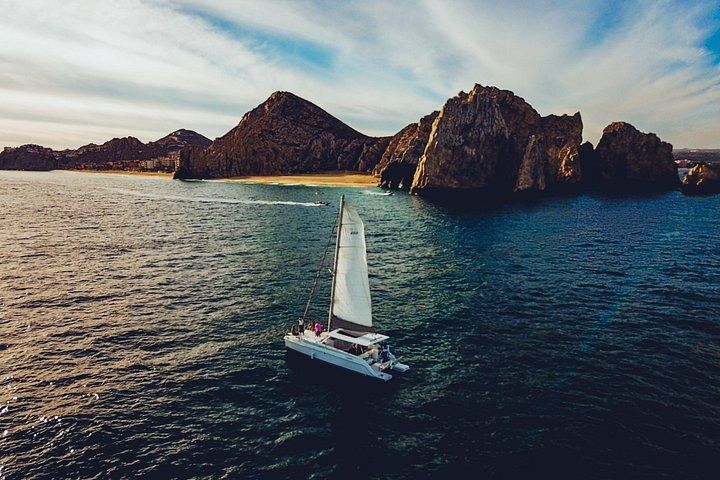
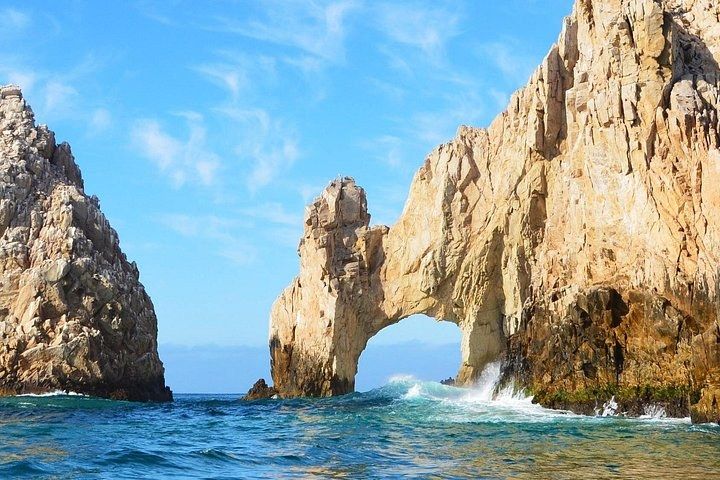
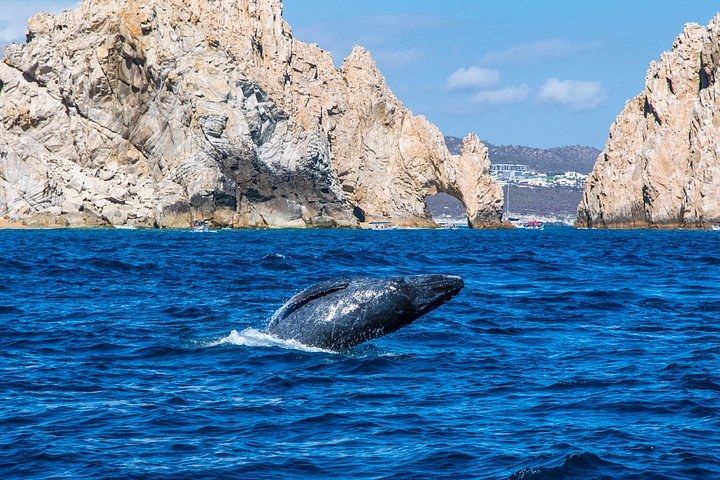
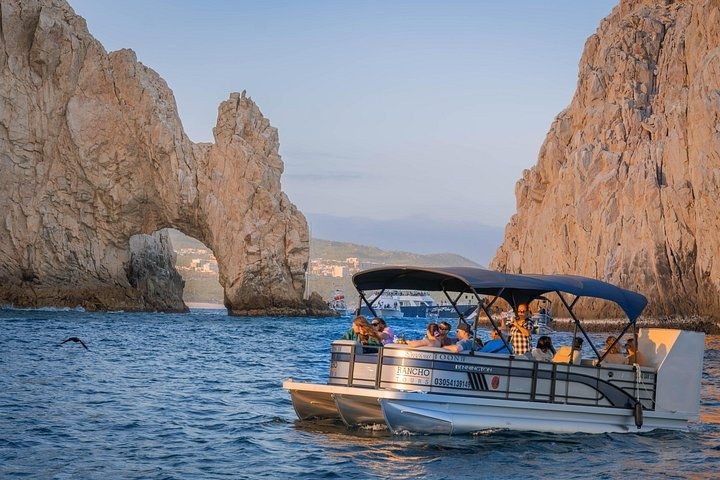
Water at the cape is a federal protected area with two zones closed to whale boats. Crews pass the Arch as scenery and look for whales outside those circles.
You go out inside a federal protected area. The Área de Protección de Flora y Fauna Cabo San Lucas covers 3,996.04 hectares, of which 3,787.99 are marine and 208.05 terrestrial, and the 2026-2027 federal notice closes two slices of it because of excessive boat traffic: the northern part of the polygon inside the port precinct, including a 2-kilometre zone around the Arch, and a 1-kilometre strip along the eastern boundary running seaward from Punta Ballenas. That is why a boat keeps moving after the photo stop at Land's End.
CONANP's record for the protected area gives a first decree of 29 November 1973 and recategorization as a Flora and Fauna Protection Area on 7 June 2000, while the municipal tourism page dates the designation of the cape waters and sand falls to 9 August 1973. Protection then spread along this coast. The San Jose del Cabo Estuary became a State Ecological Reserve on 8 October 1993, the Sierra La Laguna Biosphere Reserve behind the towns was decreed on 6 June 1994 over 112,437 hectares, and Cabo Pulmo was decreed a marine national park on 6 June 1995.
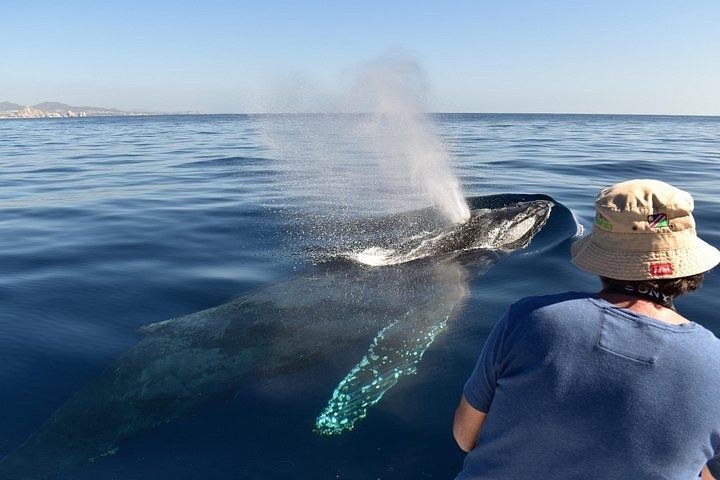
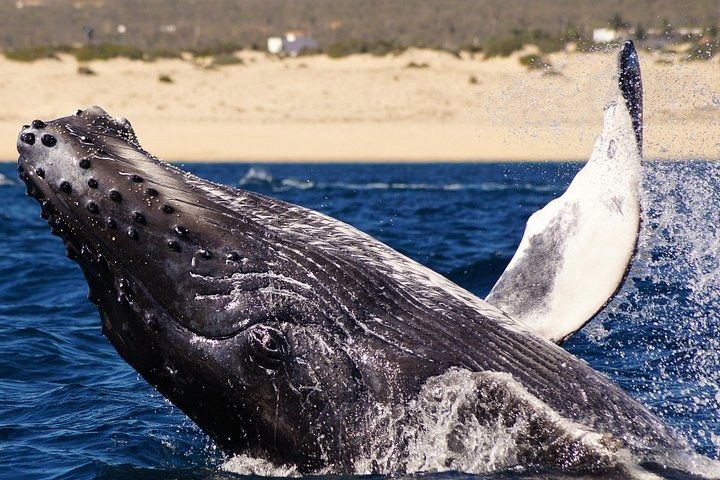
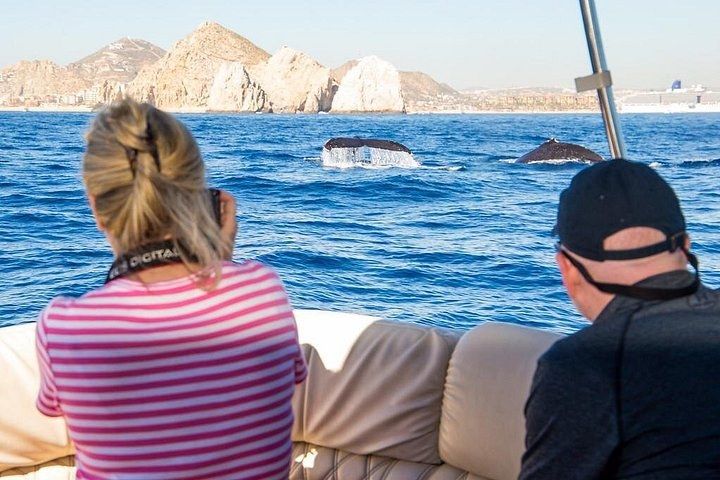
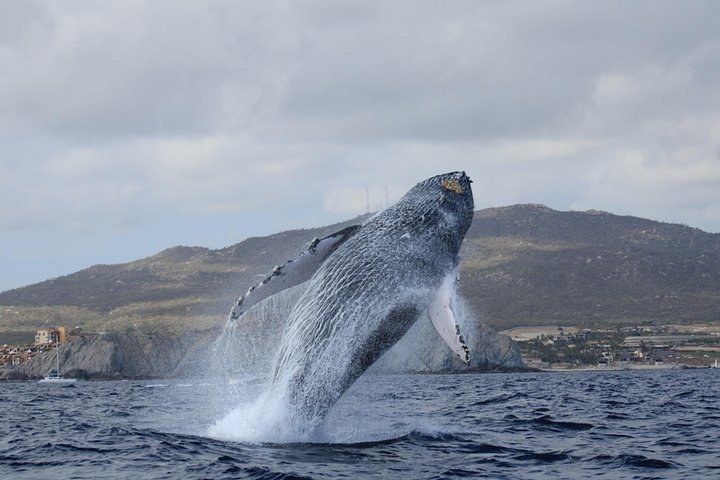
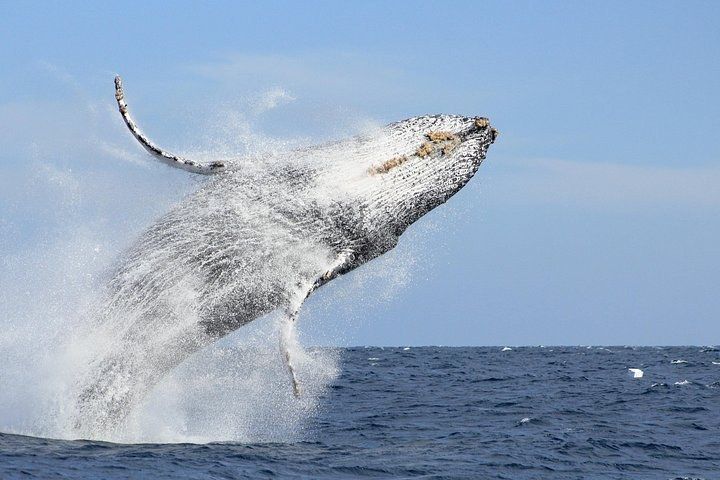
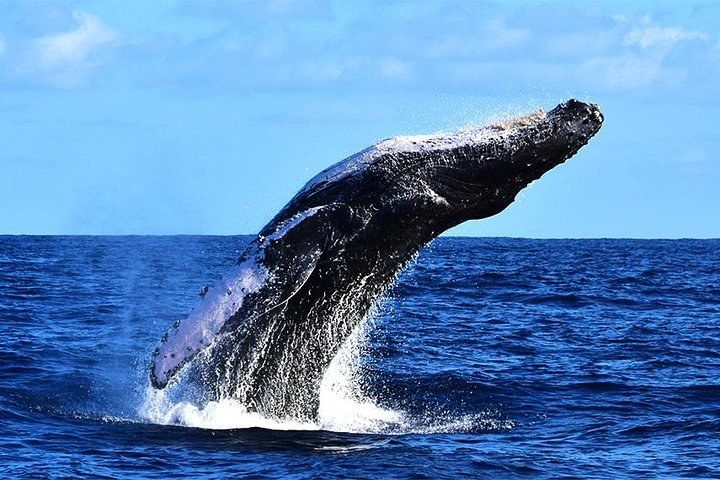
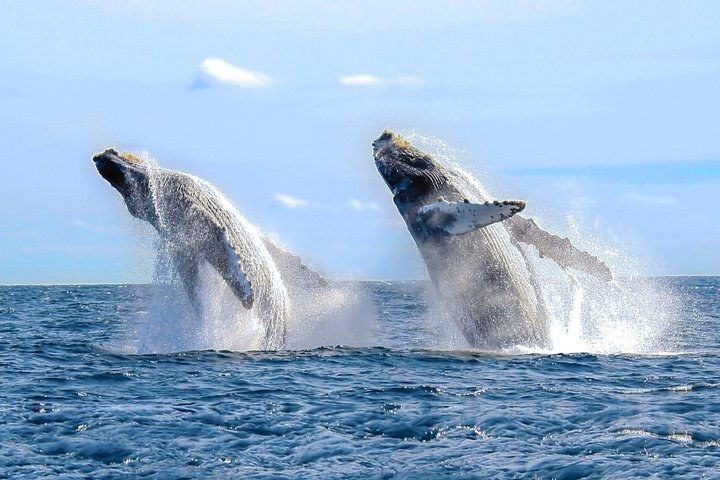
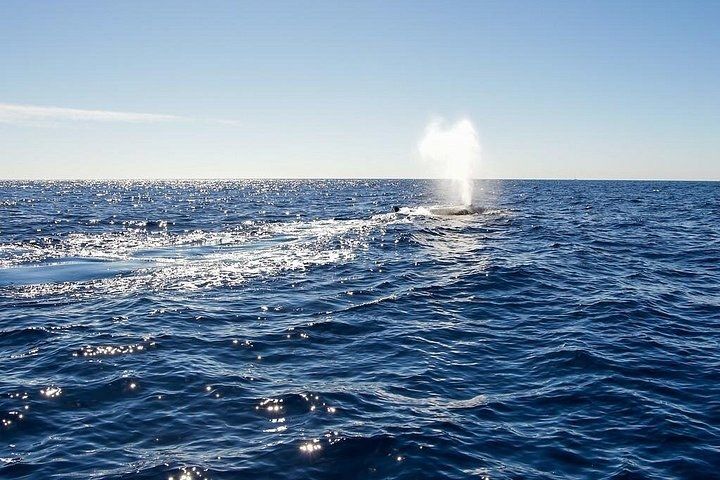
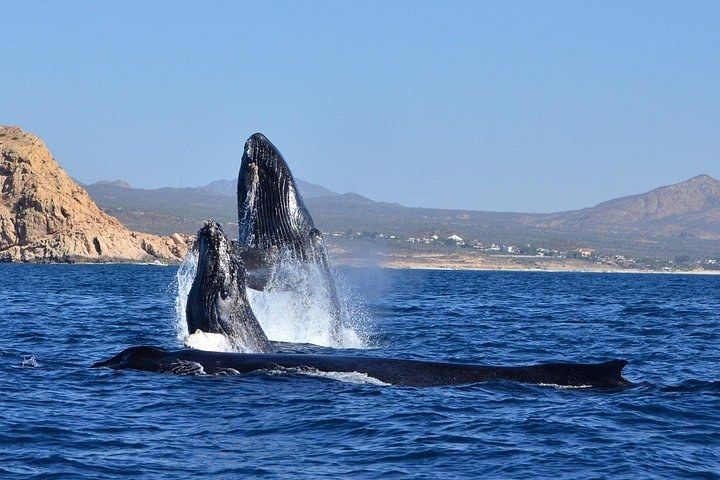
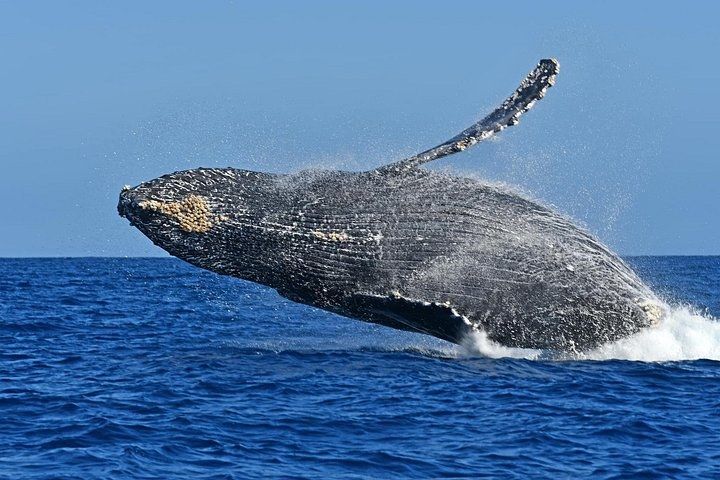
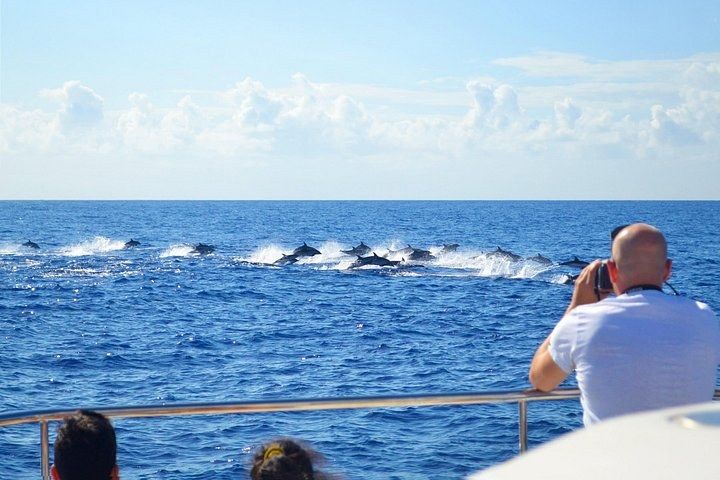
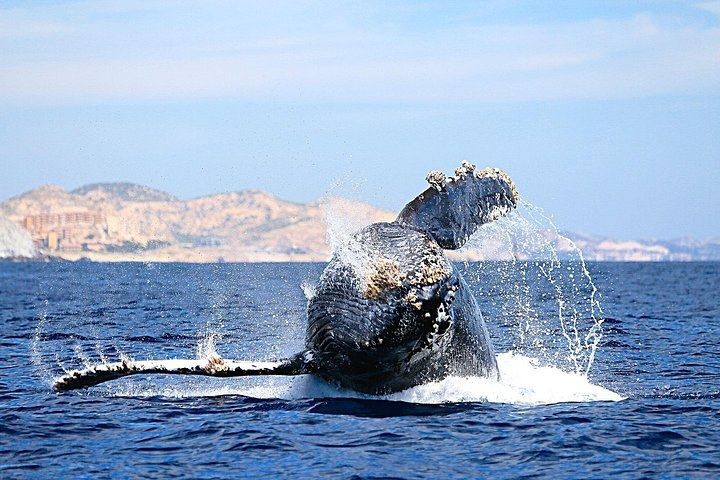
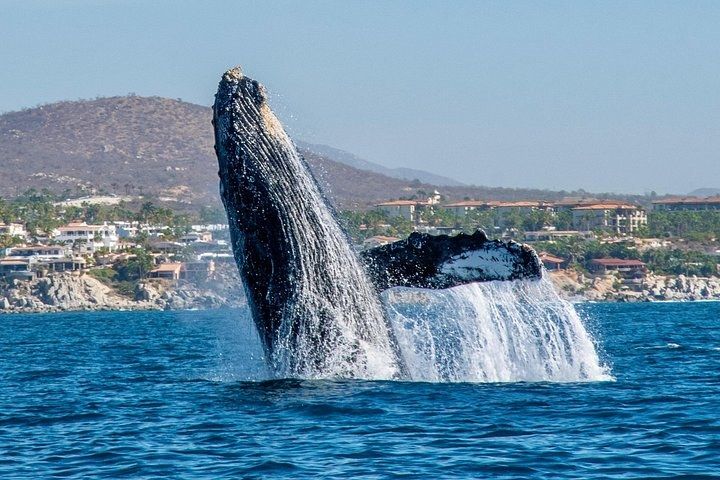
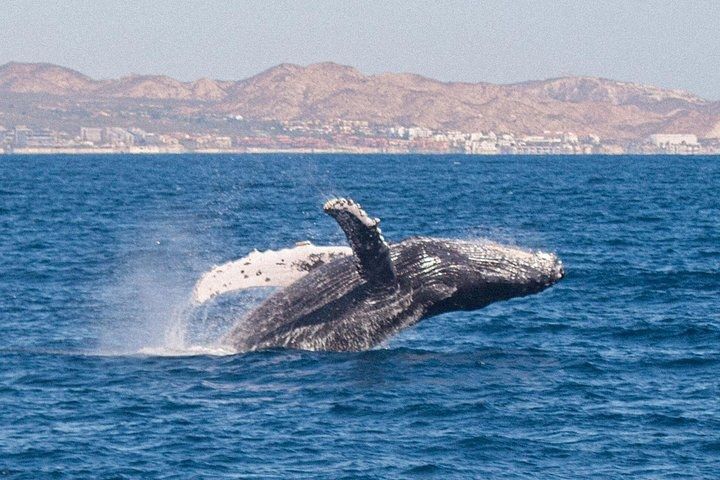
On the water the trip is shaped by numbers. Under NOM-131-SEMARNAT-2010 a boat under 10 metres holds at least 60 metres off a humpback and a medium or large boat at least 80 metres, no more than four boats stay around the same whale or group, observation stops at 30 minutes, boats waiting their turn hold 240 metres, and speed stays under 5 knots inside the area and about 2 knots on entry. At that range you watch a bushy blow 10 to 16 feet high, then breaching, spyhopping, lobtailing, pectoral slapping or a whale logging quietly at the surface.
◆
Authorized season15 Dec 2026 to 30 Apr 2027
●
Peak monthsJanuary to March
■
Protected area3,996.04 hectares
○
Marine share3,787.99 hectares
▲
Minimum distance60 m small boats, 80 m larger
□
Trip length2 to 2.5 hours
◆
2 km
Whale boats stay out of the zone around the Arch
Observation is restricted under the 2026-2027 notice in the northern part of the protected-area polygon inside the port precinct, including a 2-kilometre zone around the Arch of Cabo San Lucas. A second restricted zone is a 1-kilometre strip along the eastern boundary, running seaward from Punta Ballenas. Cruises that include the Arch pass it as scenery.
●
4 boats
Four boats and thirty minutes per whale
No more than four boats at a time may stay around the same whale or group, and a boat may observe for a maximum of 30 minutes. Vessels waiting their turn hold 240 metres. If your captain pulls away and hands over, that is the rule working.
■
60 feet
What a humpback actually is
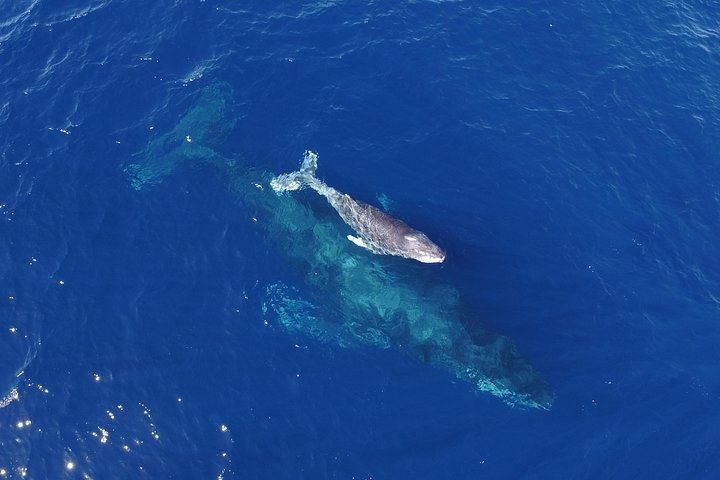
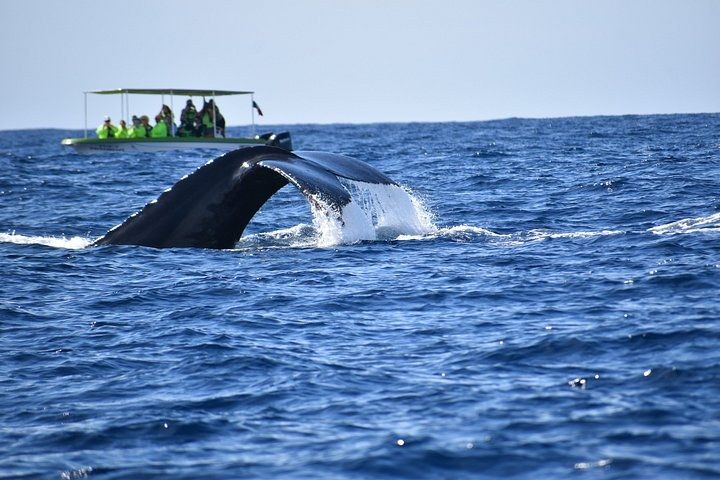
Humpbacks reach about 60 feet and up to about 40 tons, with females larger than males, and live about 80 to 90 years. Their flukes can be 18 feet wide, which is why a raised tail is so conspicuous from a small boat. Calves are born after an 11-month gestation at about 13 to 16 feet and stay with the mother for up to a year.
○
7 to 30 min
Why a hydrophone boat goes quiet
Male song is built from themes, phrases, units and subunits, a complete song lasts 7 to 30 minutes, and songs change from year to year. Singers stay relatively stationary throughout the display. A crew may switch the engine off only to use a hydrophone, which is why the hydrophone boats sound different from everything else.
▲
5,000 miles
Why they are here in winter
Some humpback populations migrate about 5,000 miles between tropical breeding grounds, such as the waters off the cape, and colder feeding grounds. The population that winters off Mexico breeds along the Pacific coast and the Revillagigedo Islands, transits the peninsula and feeds from California to the Aleutians. At least nine whale species live in Mexican waters and SEMARNAT classifies all of them as at risk.
□
1973
Protected before the first tour boats
CONANP's record gives a first decree on 29 November 1973 and recategorization as a Flora and Fauna Protection Area on 7 June 2000. The municipal tourism page dates the designation of the cape waters and sand falls to 9 August 1973. The season window on top of that is reset each year by a SEMARNAT notice.
◆
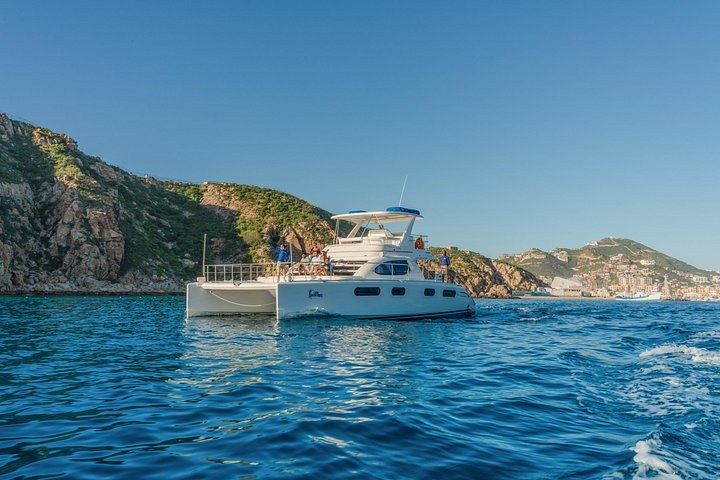
Luxury catamaran with a hydrophone
2.5 hours, from $129, 4.9 ★ (2294 reviews). A hydrophone on board to hear the whales sing, alcoholic beverages and snacks included; the round-trip transportation fee is paid at check-in and the dock entrance fee is not included.
●
Humpback trip with a marine biologist
2.5 hours, from $99, 4.9 ★ (1065 reviews). Bottled water, marine park fees and a marine biologist guide are included; souvenir photos are sold separately and hotel pickup is not included. The office is inside the Tesoro Hotel, Local A-20, close to dock M-O.
■
Small-group biologist boat with a restroom
2.5 hours, from $109, 4.9 ★ (1256 reviews). A hydrophone for whale song, a restroom on board and the guide's photos offered at no extra charge. Single-use plastic bottles are no longer provided, so carry your own; transportation and gratuities are not included.
○
All-female crew with a sighting guarantee
2 hours, from 1,680 pesos, 5.0 ★ (2144 reviews). Biologist captains and guides, digital photos of the tour and bottled water included, plus a whale warranty giving a second tour at no cost if no whales are found. The boat is at dock zero in front of the Breathless hotel.
▲
Sunset cruise and the short Arch cruise
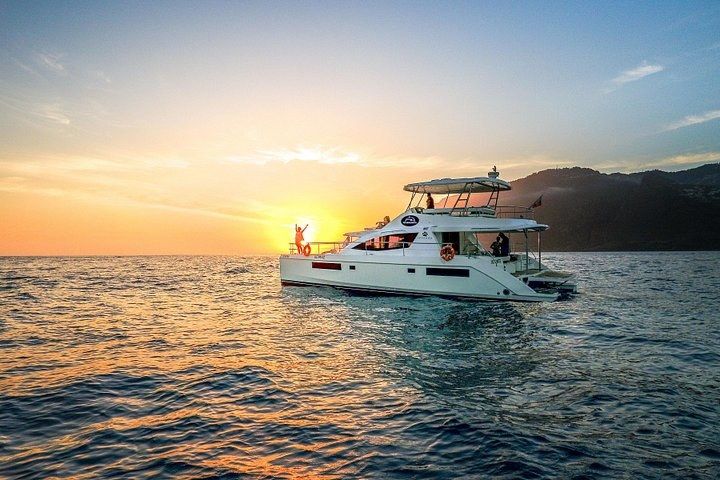
Sunset runs 2 hours, from $109, 4.6 ★ (47 reviews), with beer, bottled water, marine park fees and a marine biologist guide. The Arch cruise is 2 hours, from $95, 4.6 ★ (151 reviews), on a crewed luxury catamaran with a maximum of 16 travellers, live guide in English and open bar.
□
San Jose del Cabo departure, and the La Paz day
From Puerto Los Cabos Marina the group tour runs 2 hours, from $99, 5.0 ★ (271 reviews), with hydrophone listening, water, cookies and tour pictures at no extra charge. The La Paz whale shark snorkel day is 10 hours, from $259, 4.9 ★ (1141 reviews), with wetsuits, gear, fish tacos and hotel pickup included; put it on a different day.
Whale watching Cabo San Lucas against other Baja options
Four places in Baja California Sur that get recommended in the same breath, and what each one actually asks of your day.
Three other spots in Baja California Sur come up in the same conversation, and they are not substitutes. Whale watching Cabo San Lucas means a 2-hour or 2.5-hour boat trip from the marina inside a protected area with fixed distances and a 30-minute limit per whale. San Jose del Cabo gives you the same animals from a quieter marina along the eastern corridor. La Paz is a full day snorkelling with whale sharks. La Ventana is orcas, and the only place in Mexico where swimming with them has been legalized.
Crowds
Price
Best For
What Sets It Apart
★ Cabo San Lucas
The busiest water at the cape: two zones are closed to whale boats for excessive traffic, and four boats maximum may stay with one whale
From $85 to $129 for 2 to 2.5 hours, plus two trips priced in pesos; dock entrance fees are not included
Humpback and gray whales on a short trip, strongest in the January to March peak
Hydrophone boats, biologist guides and a 3,996.04-hectare federal observation area that starts just past the Arch
San Jose del Cabo
A quieter departure from Puerto Los Cabos Marina, which has 230 slips and takes vessels up to 250 feet
From $99 for 2 hours; private transportation is not included
Anyone staying in San Jose del Cabo or along the eastern corridor
Meeting times generally 8:15 AM or 11:30 AM, hydrophone listening, and tour pictures at no extra charge
La Paz
Whale shark boats are capped at 36 feet with groups of five
From $259 for 10 hours, hotel pickup and drop-off included
Strong swimmers and early risers who want time in the water rather than on deck
A season from October through May, wetsuits, snorkel gear and Baja-style fish tacos; the activity has been suspended mid-season in the past
La Ventana
A pilot scheme capped at 24 boats a day
Not among the tours on this site
Travellers set on orcas who will give up at least six hours from Los Cabos
Baja California Sur is the first Mexican state to legalize swimming with orcas, only here; the El Sargento-La Ventana observation area covers 110,906.06 hectares and runs 10 nautical miles beyond Isla Cerralvo
For a short trip that still puts you beside humpbacks, whale watching Cabo San Lucas is the one to book first: departures leave from the marina in town, formats run from a 2.5-hour zodiac from $85 to a 2.5-hour catamaran from $129, and several boats carry a hydrophone, the only legal reason a crew may shut the engine down. La Paz and La Ventana both cost you the entire day.
Practical info
Everything to know about Cabo San Lucas
Access, season dates, packing, the rules worth checking on board and the medical advice that actually reduces seasickness.
Getting to the marina and the right dock gate
Los Cabos International Airport is the arrival point for both towns. The official tourism board puts it 8 miles from San Jose del Cabo and a 23-mile drive from Cabo San Lucas, while the airport operator states 11 kilometres to San Jose del Cabo. Three terminals share four halls: Terminal 1 handles all domestic operations plus some international flights, and Terminal 2 is international only. Build the transfer south into your plan before you pick a morning departure.
Between the two towns the Ruta del Desierto urban bus connects the main points, costs between 2 and 3 US dollars depending on the exchange rate, stops at major hotels along the highway and takes approximately one hour. A taxi or van between the two cities costs around 60 to 70 US dollars. Red and yellow taxi vans work in San Jose del Cabo and blue and green vans in Cabo San Lucas, both 24 hours a day.
Airport to San Jose del Cabo: 8 miles per the tourism board, 11 kilometres per the airport operator
Airport to Cabo San Lucas: a 23-mile drive, per the official tourism board
Terminal 1 covers all domestic flights plus some international; Terminal 2 is international only
Ruta del Desierto bus between the towns: between 2 and 3 US dollars, approximately one hour
Taxi or van between the two cities: around 60 to 70 US dollars, available 24 hours
Tesoro Hotel office, Local A-20: close to dock M-O, next to the white lighthouse with a red stripe, behind the D'Right Joint restaurant
Plaza Bonita office is behind Starbucks from the road and behind Nowhere Bar from the marina side; dock zero is in front of the Breathless hotel
Puerto Los Cabos Marina sits in La Playa just east of San Jose del Cabo's historic centre, at 23 degrees 03.4 minutes north, 109 degrees 40.2 minutes west, with most local hotels 10 to 15 minutes away
When the season opens and which weeks to pick
Aim for mid-January to the end of February. A federal notice signed in Mexico City on 22 October 2026 authorizes the 2026-2027 season in the Cabo San Lucas area from 15 December 2026 to 30 April 2027, and the same window applies to the protected area that includes San Jose del Cabo and to Cabo Pulmo National Park. Peak months run from January to March. The official tourism board describes the window more loosely as early December to mid-April, varying year to year.
Winter at the cape is mild rather than hot. Mean monthly air temperature is 22.1 C in December, 21.2 C in January, 20.9 C in February, 21.5 C in March and 22.2 C in April, which the tourism board puts at around a comfortable 75 F from December to February and the low 80s in March and April. Mean wind at 10 metres sits near 3.9 m/s from December to February, 4.1 m/s in March and 4.3 m/s in April, out of the north-northwest.
Authorized 2026-2027 season at the cape: 15 December 2026 to 30 April 2027, set by notice signed 22 October 2026
Peak: January to March, when calves born at about 13 to 16 feet are in the wintering grounds
Early departures bring calmer seas and softer light, according to the official tourism board
Sunset trips give the warmest low light, which is the reason to take the late slot
Light on 15 December: sunrise 06:53, sunset 17:37, civil twilight 06:28 to 18:02
Light on 15 February: sunrise 06:52, sunset 18:16, solar noon 12:34, civil twilight ending 18:39
Sea surface off the cape was 23.5 C on 15 February 2026 and 19.9 C on 15 February 2025, so water temperature swings between years
What to carry on a two-hour boat
Pack for a mild, breezy morning on open water rather than a beach day. Air temperature averages 20.9 C in February and 22.2 C in April, and the north-northwest breeze over the deck makes it feel cooler than the number suggests. Carry sun cover for the full 2 to 2.5 hours, a reusable bottle, and your motion sickness remedy taken before boarding rather than after the first swell. A zoom lens matters here because the boat holds 60 to 80 metres off the whale.
For clothing, layers you can shed once the sun is up work better than a single jacket. On the small-group biologist trip single-use plastic bottles are no longer provided on board, so a refillable bottle is part of the kit. For photography, the National Park Service advice for moving wildlife is Shutter Priority at 1/1000 second with ISO on Auto, which gives sharp frames without a tripod, with a high burst rate set before you leave the dock and the sun kept behind you.
Layers for air of 20.9 C to 22.2 C plus a north-northwest breeze over the deck
A reusable bottle: the small-group trip no longer provides single-use plastic bottles
Sun cover for the whole 2 to 2.5 hours, most of it with the boat moving
A zoom lens, since permitted boats close to roughly 60 to 80 metres depending on vessel size
Camera on Shutter Priority at 1/1000 second with ISO on Auto, per National Park Service guidance
High burst rate set before boarding, with an early frame taken and then continuous shooting
Motion sickness remedy taken before departure, and no alcohol beforehand: the CDC notes it increases motion sickness
A warm top for the sunset trip, when the light goes quickly in December
How to tell a legal boat from the dock
Anyone offering this service must first hold a SEMARNAT authorization for non-extractive use of wildlife, and authorized boats carry an official identifying marker in a visible place while working. In practice that marker is a flag issued to each authorized company every season, numbered in the bottom right corner for the year, flown at all times on the water. Ask to see it before you pay. At the start of every trip the crew must brief passengers on required behaviour and display the rules on visible signage.
Four numbers let you check the trip as it happens: four boats maximum around one whale, 30 minutes maximum on the same group, 240 metres while waiting your turn and under 5 knots inside the observation area, dropping to about 2 knots on entry. Approach to a travelling whale is made only on a diagonal from the rear quarter, parallel to its course. One trip here is priced in pesos, from 1,680 pesos; dock entrance fees, gratuities and most hotel transport are listed as not included.
Ask to see the SEMARNAT flag with this season's number in the bottom right corner before you hand over money
A passenger briefing at the start of the trip is a legal requirement, along with the rules on visible signage
Four checkable limits: four boats per whale, 30 minutes, 240 metres while waiting, under 5 knots inside the area
Boats without a permit must stay much further off, about 800 feet, so a cheap unpermitted ride cannot deliver what it advertises
Dock entrance fees, gratuities and most hotel transport are not included in the listed prices
Legal drinking age in Mexico is 18, which matters on the open-bar catamaran and sunset cruises
For the San Jose del Cabo tour, meeting times are generally 8:15 AM or 11:30 AM and may change, so check the confirmation email the day before
Seasickness, suitability and who to call
Motion sickness advice from the CDC is specific and worth following. A visual horizon reference has been shown to give some protection, so stay where you can see it. Avoid areas of maximum motion such as the bow, align your posture with the boat's movement, keep head movements down and skip reading or scanning a screen. Alcohol and smoking both increase symptoms. Susceptibility peaks between ages 7 and 12 and then declines, and children under two are usually unaffected.
Suitability is set by the format. Operator-published terms for Zodiac-style fast boats at the cape set a minimum age of five and exclude pregnant guests and people with heart, back or neck problems, so if that covers anyone in your group, choose a catamaran or the small-group boat with a restroom on board. Swimming, diving, fishing, water-skiing and parasailing are prohibited during observation. For assistance in town, CATAC is on Blvd. Paseo de la Marina in the Cabo San Lucas marina, telephone +52 624 143 7231.
Keep a visual horizon reference: the CDC says it gives some protection against motion sickness
Avoid the bow and other areas of maximum motion, and align your posture with the boat's motion
Avoid head movements, reading and visual scanning while under way
Fresh air on the face, music and pleasant scents help; heightened sensitivity to smells is itself a symptom
Habituation is the most effective countermeasure, more than any medication, which argues for two short trips rather than one long one
Sleep deprivation worsens symptoms, so a late night before an early departure is a poor combination
Tourist assistance: CATAC, Blvd. Paseo de la Marina S/N, Mza. s/n Lt. 8, Marina de Cabo San Lucas, C.P. 23450, telephone +52 624 143 7231
Location
Find Cabo San Lucas Marina
The marina area, with the tourist assistance office at Blvd. Paseo de la Marina S/N, Mza. s/n Lt. 8, Marina de Cabo San Lucas, Col. Centro, C.P. 23450, Cabo San Lucas, Baja California Sur.
Plan your visit
Practical information for whale watching at Cabo San Lucas
Season dates, observation rules, winter weather and light, departure marinas and transport across Los Cabos.
Season dates, the Mexican observation rules that shape every departure, and which of the tours on this site suits your group.
Dates are fixed each year by a federal notice. For 2026-2027 the notice, signed in Mexico City on 22 October 2026, authorizes the activity in the Cabo San Lucas area from 15 December 2026 to 30 April 2027, and the same window applies to the Cabo San Lucas Flora and Fauna Protection Area, which includes San Jose del Cabo, and to Cabo Pulmo National Park. The official Los Cabos tourism board describes the window more loosely as early December through mid-April, varying year to year. Note that the authorized end date this season runs two weeks later than the mid-April date most marketing still prints.
Mid-January to the end of February is the strongest balance of numbers, newborn calves and settled water, and the tourism board places the peak of the season from January to March. Mean air temperature at the cape is 21.2 C in January and 20.9 C in February, with the board describing December to February as hovering around a comfortable 75 F. Mean wind at 10 m is about 3.9 m/s in December, January and February, rising to 4.1 m/s in March and 4.3 m/s in April, so the later weeks are the breezier ones. For the time of day, the board's own advice is that early departures bring calmer seas and softer light, while sunset trips give the warmest low light.
No. Observation is restricted in the northern part of the protected-area polygon inside the port precinct, including a 2-kilometre zone around the Arch of Cabo San Lucas, and in a 1-kilometre strip along the eastern boundary of the polygon running seaward from Punta Ballenas. Cruises that feature the Arch pass it as scenery and then keep moving; the animals are found further out, in the rest of the Area de Proteccion de Flora y Fauna Cabo San Lucas, which covers 3,996.04 hectares, 3,787.99 of them marine. If the Arch itself is what you want photographed, the Luxury Whale Watch Cruise to The Arch Los Cabos runs 2 hours, from $95, rated 4.6 ★ (151 reviews), on a crewed luxury catamaran with a maximum of 16 travellers.
Distance has a legal floor. Under NOM-131-SEMARNAT-2010 small boats under 10 m must stay at least 60 m from a humpback and medium or large boats at least 80 m, and in practice permitted boats in Los Cabos close to roughly 60 to 80 metres depending on vessel size. Boats waiting their turn hold 240 metres, no more than four boats at a time may stay around the same whale or group, and the observation period is capped at 30 minutes. Speed stays under 5 knots (9 km/h) inside observation areas and about 2 knots (4 km/h) on entering the zone, and an approach to a travelling animal is made only on a diagonal from the rear quarter, parallel to its course.
Anyone offering the activity must first hold a SEMARNAT authorization for non-extractive use of wildlife, and authorized boats carry an official identifying marker in a visible place. SEMARNAT issues each authorized company a new flag every season with a number in the bottom right corner identifying the year, and it must be flown at all times while the boat is observing. At the start of every trip the operator is required to brief passengers on how they must behave and to display the rules on visible signage, so the absence of a briefing tells you something. A boat without a permit has to stay about 800 feet off, which is far beyond the 60 to 80 metres a permitted vessel may use.
Swimming with whales is illegal in Cabo, and fishing, diving, swimming, water-skiing and parasailing are all prohibited during observation. Jet skis, kayaks, canoes and paddle-powered inflatables may not be used for the activity at all, and sonar or echo sounders may not be used to locate animals. Baja California Sur did become the first Mexican state to legalize swimming with orcas, only at La Ventana, under a pilot scheme capped at 24 boats a day and at least a six-hour commitment from Los Cabos; the El Sargento-La Ventana observation area covers 110,906.06 hectares and extends 10 nautical miles beyond Isla Cerralvo. If getting in the water is the point, the La Paz whale shark day on this site is the in-water option, with its own season from October through May.
A hydrophone is the one legal reason an engine goes quiet. While observing, boats must keep the engine running in neutral when the whale is not moving and may switch it off only to use a hydrophone to listen, so a hydrophone boat is the only configuration that gives you a silent encounter. Three of the tours on this site carry one: the Cabo San Lucas Luxury Catamaran, 2.5 hours, from $129, 4.9 ★ (2294 reviews); the Small-Group Whale Watch with Marine Biologist, 2.5 hours, from $109, 4.9 ★ (1256 reviews), which also has a restroom on board; and the group tour from Puerto Los Cabos Marina in San Jose del Cabo, 2 hours, from $99, 5.0 ★ (271 reviews). Male song is built from themes, phrases, units and subunits, a complete song lasts 7 to 30 minutes, and singers stay relatively stationary throughout the display.
Three listings on this site state a guarantee. The clearest is Cabo Whale Watching with the all-female crew, 2 hours, from 1,680 pesos, 5.0 ★ (2144 reviews), whose whale warranty gives a second tour at no cost if no whales are found on the first; the Small-Group Whale Watch with Marine Biologist and the zodiac trip from the same Plaza Bonita office, both from $109, also state that a guest who sees no whales from 15 December into April may come out again at no cost. That is only useful if you have a spare morning left, so book it early in your stay rather than on your last day. The crew is described as biologist captains and guides, and digital photos of the tour and bottled water are included, while gratuities, the dock fee and the optional shuttle are not. Humpback and gray whales are the species most commonly seen in Los Cabos, with blue, fin and orca sightings far rarer.
CDC guidance is practical: keep a visual horizon reference, avoid areas of maximum motion such as the bow, align your posture with the motion of the boat, avoid head movements, and avoid reading or visual scanning. Skip alcohol and smoking, because both increase motion sickness, and use fresh air on the face, music or pleasant scents as distractions; increased sensitivity to odour is itself an early symptom, and sleep deprivation makes everything worse. Susceptibility peaks between ages 7 and 12 and then declines through adulthood, and children under two are usually unaffected. For a family, the steadier choices are the 2.5-hour catamaran from $129 with shade, drinks and snacks, or the Small-Group Whale Watch from $109, which is the one with a restroom on board.
Staying east, take the group departure from Puerto Los Cabos Marina in San Jose del Cabo, 2 hours, from $99, 5.0 ★ (271 reviews), with hydrophone listening, water and cookies on board and tour pictures at no extra charge; meeting times are generally 8:15 AM or 11:30 AM but can change, so check the confirmation email the day before. Most local hotels are 10 to 15 minutes from that marina by taxi or ride-hail, and red and yellow taxi vans work in San Jose del Cabo while blue and green ones run in Cabo San Lucas. The Ruta del Desierto bus links the main points between the two cities in approximately one hour and costs between 2 and 3 US dollars depending on the exchange rate, against around 60 to 70 US dollars by taxi or van. The La Paz Whale Shark Snorkeling Tour and Lunch from Los Cabos runs 10 hours, from $259, 4.9 ★ (1141 reviews), with hotel pickup and drop-off, wetsuits, snorkelling gear and Baja-style fish tacos included; put it on a different day from your boat trip at the cape.
January to March weeks fill first, and the early departures go before the afternoons.
From a 1973 decree to this season's federal notice
Protection at the cape predates the boat business by decades: CONANP's record gives a first decree on 29 November 1973 and recategorization as a Flora and Fauna Protection Area on 7 June 2000, while the municipal tourism page dates the designation of the cape waters and sand falls to 9 August 1973. Season dates sit on top of that protection and reset every autumn, the current notice having been signed in Mexico City on 22 October 2026.