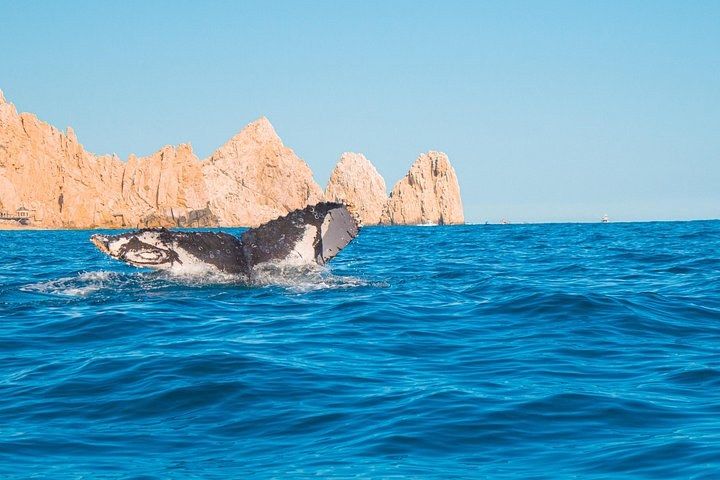
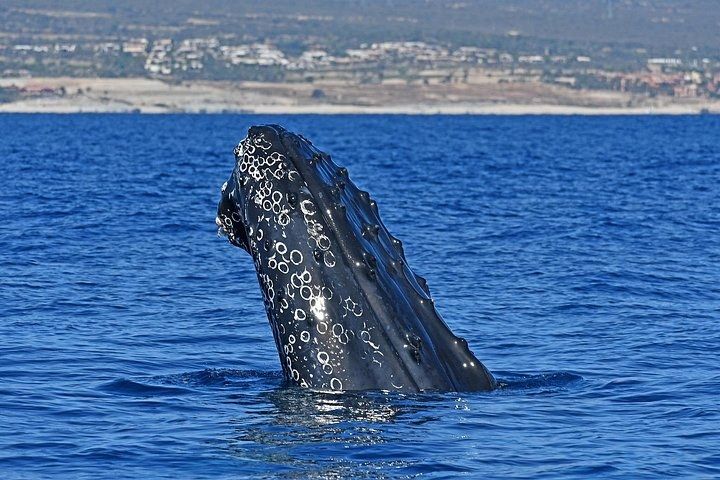
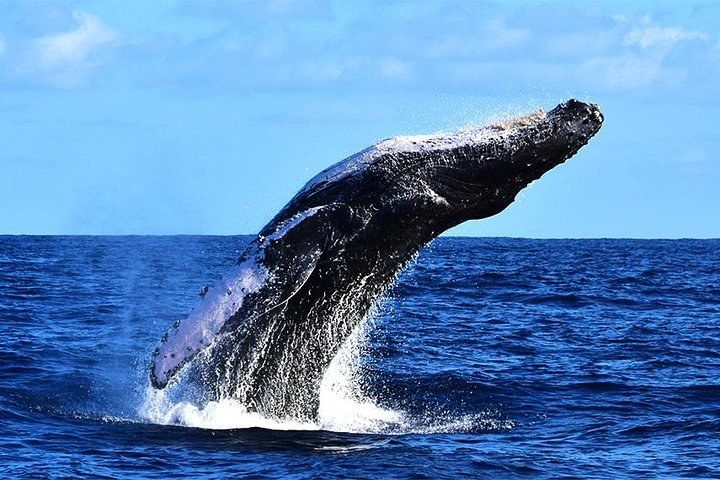
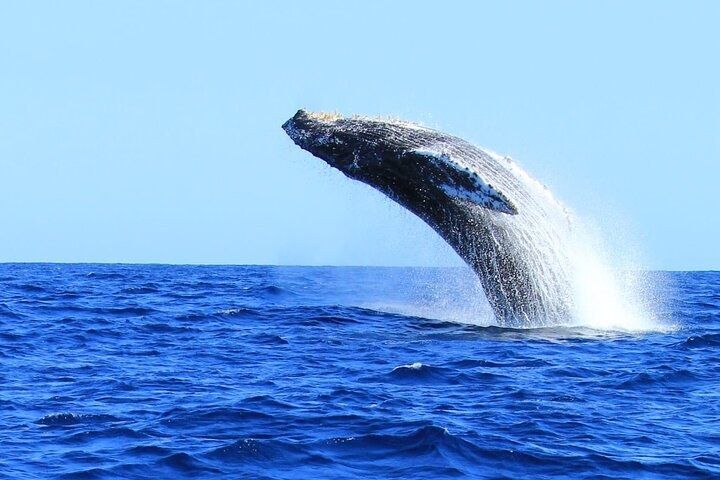
In shortThe best time for whale watching in Cabo is the January to March peak, with the second half of January and February the strongest stretch: mean wind at 10 metres is 3.9 m/s in those months against 4.3 m/s in April. For time of day, take a morning departure, which the official tourism board links to calmer seas and softer light.
15 Dec – 30 Apr2026-2027 authorized season
January to Marchpeak of the season
3.9 m/smean wind, December to February
18:16sunset on 15 February
The best month for whale watching in Cabo
January to March is the peak of the season, and inside that window the figures favour February. Mean wind at 10 metres holds at 3.9 m/s in December, January and February, then rises to 4.1 m/s in March and 4.3 m/s in April. The gap looks trivial written down and matters on the water, because a permitted boat works from 60 to 80 metres off the animal and spends most of a 2 or 2.5 hour trip reading the surface for a blow.
Calf activity lines up with the same weeks. Humpback calves measure about 13 to 16 feet at birth after an 11-month gestation and stay with their mother for up to a year, and a female produces one calf every two to three years on average, so pairs rather than single animals are the typical sighting in mid-peak. Boats may not place themselves between a mother and calf, so expect a captain who holds off to one side and lets the pair set the pace.
December sits outside the peak and carries the shortest daylight of the whole window. April is authorized to the 30th for 2026-2027 and has the warmest mean air temperature of the five months at 22.2 C, along with the strongest mean wind at 4.3 m/s out of 306 degrees. With flexible dates, book the second half of January or February and keep March as the fallback.
| Month | Position in the season | Mean wind at 10 m | Prevailing direction | Mean air temperature |
|---|
| December | Season opens 15 December, outside the peak | 3.9 m/s | 341 degrees, north-northwest | 22.1 C |
|---|
| January | Inside the January to March peak | 3.9 m/s | 340 degrees | 21.2 C |
|---|
| February | Inside the peak | 3.9 m/s | 329 degrees | 20.9 C |
|---|
| March | Last month of the peak | 4.1 m/s | 315 degrees | 21.5 C |
|---|
| April | After the peak, authorized to 30 April 2027 | 4.3 m/s | 306 degrees | 22.2 C |
|---|
Early December and the last two weeks of April
The legal window for 2026-2027 opens on 15 December 2026 and closes on 30 April 2027, fixed by a federal notice signed in Mexico City on 22 October 2026. Some operator calendars still print a 15 April finish, which makes the final authorized fortnight look shut when it is open. Travelling in late April, check the notice in force for that season and then go looking for a departure instead of writing the trip off.
Before 15 December dedicated whale-watching tours cannot be sold. In that run-up the marina offices switch to marine wildlife sightseeing trips past the Arch, Lovers Beach and Pelican Rock, which is a decent boat ride on its own terms with whales as an incidental extra. Book it as sightseeing and keep the whale budget for a departure inside the authorized dates.
Daylight works in your favour at the back end of the season. Sunrise on 15 December is 06:53 and sunset 17:37; by 15 April the sun is up at 05:59 and down at 18:40, with civil twilight lasting until 19:03. Even so, the sensible choice in April is the earliest departure available, since the official tourism board ties early tours to calmer seas.
Best time of day for whale watching in Cabo
Morning is the default slot. The official Los Cabos tourism board states that early tours bring calmer seas and softer light, and flat water is worth more to you than any feature on the booking page, because the boat has to hold its distance and scan patiently. Taking the first slot also leaves the rest of the day free, which matters if the sea is up and you want another go.
Late afternoon earns its place for photographs. The same tourism board describes sunset trips as giving the strongest low-angle light, which is a real difference on a dark animal against bright water. Light times decide whether the slot works at all: on 15 December sunset falls at 17:37 with civil twilight ending at 18:02, while on 15 February sunset is 18:16 with civil twilight running to 18:39. Midday carries its own problem, with solar noon at 12:29 on 15 January and 12:34 on 15 February putting the sun high and hard over the water.
- Take the morning slot if sighting odds and comfort matter more to you than light quality.
- Take the morning slot with children aboard: motion sickness susceptibility peaks between ages 7 and 12 and declines after that, and children under two are usually unaffected.
- Take the late slot if photography is the point, with Shutter Priority at 1/1000 second, ISO on Auto, burst mode on and the sun at your back.
- Book the late slot from February onward rather than in December, when usable light is finished by 18:02.
- Skip the late slot if anyone in the party is prone to seasickness.
- Either way, the whale distance is the same: 60 metres for boats under 10 m and 80 metres for medium or large vessels.
The late-light departure
If you are booking the end of the day for the light rather than the flattest water, this is the 2-hour sunset trip, with a marine biologist guide, beer, bottled water and marine park fees included.
★ 4.6/5 · 47 reviews
Winter wind and what the deck feels like
Weather for whale watching in Cabo in winter is mild rather than hot. The coolest months are the peak ones, at 20.9 C mean air temperature in February and 21.2 C in January, with 21.5 C in March and the two shoulder months slightly warmer at 22.1 C in December and 22.2 C in April; the tourism board puts the same picture as around a comfortable 75 F from December to February, rising to the low 80s in March and April. On a moving boat with a north-northwest breeze across the deck, those numbers feel several degrees cooler.
Wind direction stays consistent all season, averaging 341 degrees in December, 340 in January, 329 in February, 315 in March and 306 in April. Winter peak speeds at 10 metres reach roughly 10 to 12 m/s, well below the summer and early-autumn maxima. Water temperature is the least predictable figure of the lot: the satellite reading off the cape was 23.5 C on 15 February 2026 and 19.9 C on 15 February 2025, with 23.4 C on 15 March 2026.
Dress in layers with a windproof outer, plan sun cover that lasts the whole 2 to 2.5 hours, and deal with motion sickness before boarding. The CDC's guidance is practical: keep a visual horizon in sight, stay out of the bow where motion is greatest, limit head movements, avoid reading or scanning, skip alcohol, and get fresh air on your face. That last point is worth noting on an open-bar boat, where the legal drinking age in Mexico is 18.
Which month and which departure to book
On the figures above, the best time for whale watching in Cabo is a morning departure in the second half of January or in February: inside the January to March peak, with mother and calf pairs in the wintering grounds and mean wind at its lowest for the season. The 2.5-hour Cabo San Lucas Luxury Catamaran Whale Watching fits that slot, from $129 and rated 4.9 ★ (2294 reviews), with a hydrophone on board plus snacks and alcoholic beverages included. Two items sit outside that starting price on an early departure: the round-trip transportation fee, settled at check-in, and the dock entrance fee.
Mexican rules allow a crew to switch the engine off only while a hydrophone is in use, so a calm morning on a hydrophone boat is the one combination that can give you a male's song, a complete one lasting 7 to 30 minutes, instead of engine noise in neutral.
If the late light is what you are after, the Sunset Whale Cruise in Cabo San Lucas runs 2 hours, from $109, rated 4.6 ★ (47 reviews), with beer, bottled water, marine park fees and a marine biologist guide included; souvenir photos and hotel pickup are not. Put it in February or later, when sunset at 18:16 and civil twilight to 18:39 leave the trip something to work with.
- Flexible dates: second half of January or February, morning departure.
- Fixed in December: go morning and accept the shortest daylight of the window, sunset at 17:37 on the 15th.
- Fixed in March: still inside the peak, with mean wind at 4.1 m/s, so take the earliest slot you can.
- Fixed in late April: the season is authorized to 30 April 2027, so book rather than assume it has closed.
- Chasing photographs: the 2-hour sunset cruise, from February onward.
Questions people ask
Which month has the warmest water off the cape?
Mid-winter water temperature swings a long way between years, so no month is reliably warmer. The satellite reading just off the cape was 23.5 C on 15 February 2026 but 19.9 C on 15 February 2025, with 23.4 C on 15 March 2026. It makes little difference to the trip in any case, since swimming and diving are prohibited during whale observation.
Is there a month when calves are most likely?
Aim at the January to March peak. Humpback calves are born after an 11-month gestation at about 13 to 16 feet and stay with their mother for up to a year, which is why newborns turn up in the Los Cabos wintering grounds in those weeks. Boats may not come between a mother and calf, and may not approach whales that are mating or giving birth.
Does an afternoon trip get the boat closer to the whales?
No. Distances are set by NOM-131-SEMARNAT-2010 regardless of the hour: at least 60 metres for boats under 10 m and 80 metres for medium or large vessels, with 240 metres while waiting your turn, four boats maximum around one whale and 30 minutes maximum on the same group. Pick your departure for the light and the sea state, because the minimum approach distance is fixed all day.
How late can a late-afternoon trip realistically run in December?
Not very late. On 15 December the sun sets at 17:37 and civil twilight ends at 18:02, so a 2-hour departure in that part of the season finishes in near darkness. By 15 February sunset is 18:16 with civil twilight to 18:39, and by 15 April sunset is 18:40 with twilight to 19:03, which is when the late slot starts making sense.
Read also