In shortCabo Pulmo is a hard-coral reef park up the east coast from Cabo San Lucas: 7,111 hectares, about 99 percent of it water, over a reef roughly 20,000 years old holding 11 of the 14 reef-building coral species recorded in the Gulf of California. A snorkeling day there is a full day, guided, with life jackets compulsory in the reef zones.
7,111 hectaresCabo Pulmo National Park
approximately 20,000 yearsage of the reef
11 of 14Gulf reef-building coral species
3.5 kmstrip closed to whale boats
What a Cabo Pulmo snorkeling tour from Cabo San Lucas involves
A Cabo Pulmo day trip from Cabo San Lucas runs on road time first and water time second. You leave the cape early, drive up past San Jose del Cabo and along the east coast, and spend the middle of the day in the water in small guided groups. The park's own administrative rules shape the format: operators must put one guide with every ten visitors, daytime snorkeling is capped at eight users per instructor, and life jackets are compulsory for users and guides alike inside the reef zones.
Water time is usually split between a few sites reached by panga from the village beach, with the boat held to 4 knots and no wake within 200 metres of the mooring buoys and inside swimming and diving zones. Entries are short and the swimming is not hard, but you are in open water over coral heads with a guide counting heads, so this suits anyone comfortable with a mask and fins rather than absolute beginners.
A reef day fills the whole calendar day, so the whale boat needs a date of its own. The whale departures from the Cabo San Lucas marina run 2 or 2.5 hours and are built around a morning or late-afternoon slot; stacking a reef day on top of one leaves you rushing both.
Inside Cabo Pulmo reef national park
The reef is the reason to come. The park's official management programme puts its age at approximately 20,000 years and records eleven of the fourteen reef-building coral species reported for the Gulf of California living on it, which is why this stretch of coast reads differently underwater from the sandy bays along the hotel corridor. Of the park's 7,111 hectares, roughly 99 percent is marine.
What you notice on a good day is density rather than variety: schooling fish stacked over the coral fingers, jacks and snapper moving in packed walls that open and close as you swim, and sea lions working the same water, curious enough to come and look at a group of snorkelers. None of it is fed or baited; capturing, disturbing, removing or extracting animals, plants or materials without authorisation is prohibited across the park, and sport fishing is allowed only in catch-and-release form.
Protection here is long-standing. Cabo Pulmo was decreed a marine national park on 6 June 1995, recategorised as a national park by an agreement published on 7 June 2000, and the summary of its management programme was published on 13 November 2009.
The whale half of the week
Humpback Whale Watching Tour in Cabo San Lucas runs 2.5 hours from the marina with a marine biologist aboard, from $99 and rated 4.9 ★ (1065 reviews), with bottled water and marine park fees included, so your reef day can stand on its own.
★ 4.9/5 · 1,065 reviews
The village, the road and Los Frailes
Cabo Pulmo is a small village on a dry, open piece of coast. Expect a handful of buildings behind the beach, dive and snorkel operations working out of them, and very little shade. Los Frailes sits just south along the same shore, the headland that closes this run of coast and the name you will see paired with Cabo Pulmo in federal documents; snorkeling in this part of Baja means those two bays and the water between them.
The approach is the part visitors underestimate. From the cape you follow the highway well past San Jose del Cabo before turning off onto the unpaved section that runs into the village, and the dirt has a say in how long the last stretch takes. Plan on the drive eating a large share of daylight in each direction, and on a late return to Cabo San Lucas.
Daylight is the limit worth checking against. On 15 January the sun is up at 07:03 and down at 17:56; by 15 February sunset is 18:16 with civil twilight running to 18:39, which gives a reef day more room at both ends.
Whales at Cabo Pulmo and the closed coastal strip
Cabo Pulmo and Los Frailes form the other authorized whale observation area in the Los Cabos municipality, alongside the protected water at the cape itself. For the 2026-2027 season the federal notice signed in Mexico City on 22 October 2026 authorizes whale watching inside Cabo Pulmo National Park from 15 December 2026 to 30 April 2027, the same window that applies at Cabo San Lucas.
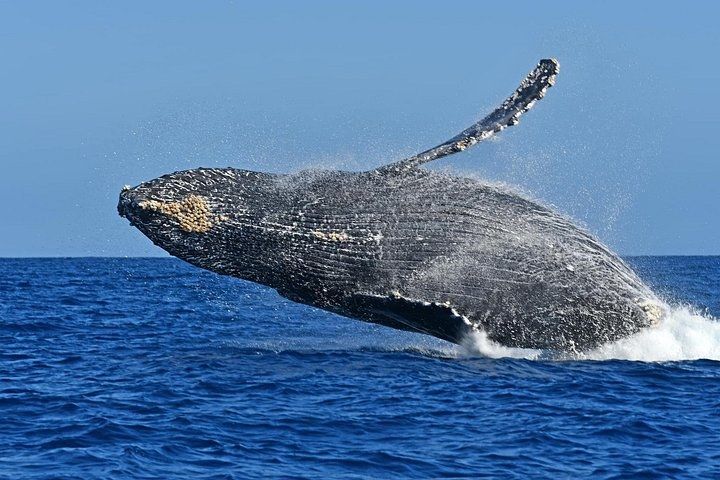
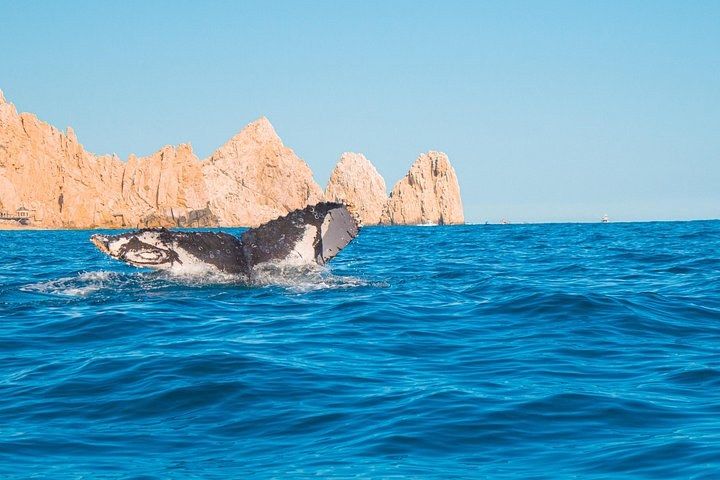
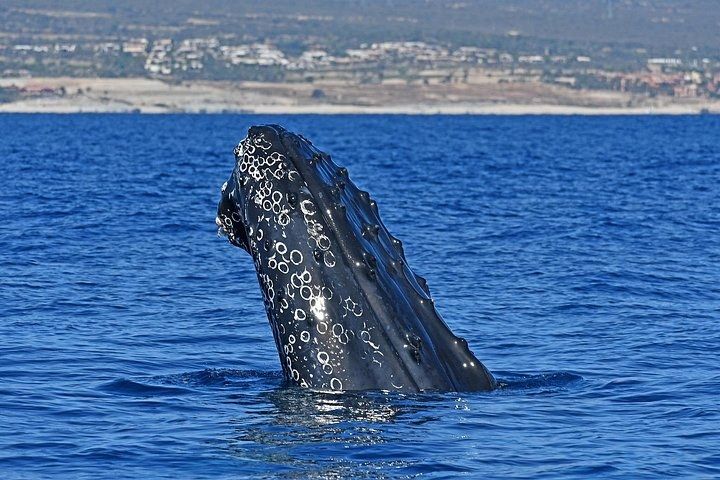
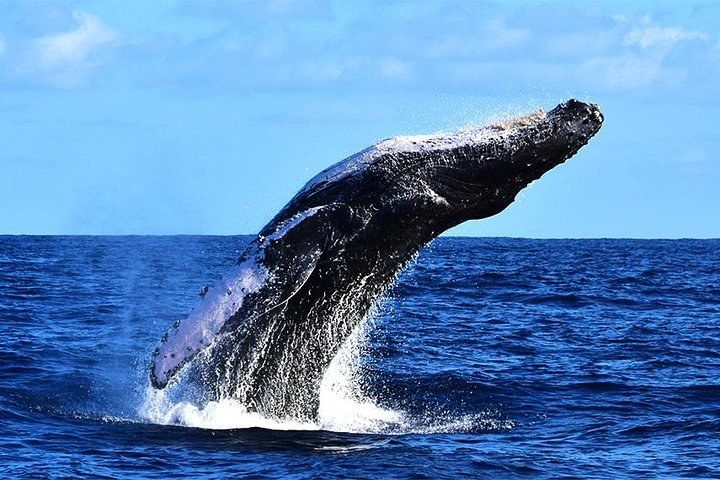
That does not make a reef day a whale day. The same notice closes a coastal band 3.5 kilometres wide there to whale-watching boats, which is exactly the water a snorkel panga works. Humpback and gray whales are the species commonly seen along this coast, so a blow in transit off the point is a real possibility while you are between sites, and it stays a bonus. Nobody is going to run you out to an animal.
If a whale does appear while you are on a boat, the national rules still apply: a vessel under 10 metres holds at least 60 metres from a humpback, a medium or large one at least 80 metres, a maximum of four boats may stay around the same whale or group, observation ends at 30 minutes, and swimming or diving during whale observation is prohibited. Book the whale side of your trip as its own 2 or 2.5 hour departure from the marina.
Park conduct rules for snorkelers
The rules below come from the park's published administrative rules and are the ones a guide will brief you on before you get in. The two that catch people out are the standoff distance from coral and the ban on gloves, because both change how you handle a camera and how close you drift while watching fish.
| Rule at Cabo Pulmo | What it means in the water |
|---|
| One guide per ten visitors | Operators must staff the day to that ratio under Regla 15, so groups stay small |
|---|
| Daytime snorkeling capped at eight per instructor | Regla 32; scuba is six or eight per instructor depending on the subzone |
|---|
| Life jackets compulsory | Regla 27 applies to users and guides in the reef zones, whatever your swimming level |
|---|
| Minimum 2.5 metres from rock and coral | Regla 30; keep fins, knees and camera arms clear of the formations |
|---|
| No touching or standing on the reef | Regla 71 prohibits treading on, holding onto or dragging equipment over the formations |
|---|
| No gloves | Banned except on permitted night dives under Regla 33 |
|---|
| 4 knots and no wake within 200 metres of mooring buoys | Regla 50 also covers swimming and diving zones |
|---|
| Nothing leaves the park | No capture, disturbance, removal or extraction without authorisation; sport fishing catch-and-release only |
|---|
Fitting the reef into a whale-season week
Put the whale boat first and the reef second. The authorized season at the cape runs from 15 December 2026 to 30 April 2027 and the thick part of it falls between January and March, so if your dates land in the second half of January or in February you have the best of the whale numbers and the season's lowest mean wind at 3.9 m/s at 10 metres. Book the boat trip on your first or second full day, take an early departure for the calmer water the official tourism board recommends, and give the reef one of the days after that.
Water temperature off the cape is the figure to hold loosely. The satellite reading was 23.5 C on 15 February 2026 but 19.9 C on the same date in 2025, with 23.4 C on 15 March 2026, so a season that felt warm for one visitor can be a wetsuit year for the next. Assume you will want thermal protection for a long snorkel day and treat warm water as luck.
Mean air temperature at the cape sits at 20.9 C in February and 21.2 C in January, with the wind out of the north-northwest. On the reef that means a cool, breezy surface interval, so bring a windproof layer and something dry to put on between entries rather than standing wet in the breeze.
Questions people ask
Can I do Cabo Pulmo and a whale-watching tour on the same day?
Plan them as two separate days. The whale departures from Cabo San Lucas are 2 or 2.5 hours and work best in the first morning slot, while the reef needs a drive up the east coast in each direction plus several hours in the water. Doing both in one day means arriving at the reef in the worst of the light and the wind.
Can I swim with whales at Cabo Pulmo?
No. For as long as whale observation is under way, Mexican rules close that water to swimmers, divers, anglers, water-skiers and parasailers, and getting into the water with a whale is illegal in Cabo in any case. Orcas at La Ventana are the state's one in-water cetacean permission, run as a pilot scheme capped at 24 boats a day and costing you at least six hours from Los Cabos. The whale shark snorkel is a different trip on a different coast, sold out of La Paz on its own season from October through May.
Does sport fishing happen inside the park?
Only in catch-and-release form. Capturing, disturbing, removing or extracting animals, plants or materials without authorisation is prohibited throughout Cabo Pulmo National Park, which is part of why the fish aggregations over the reef are what they are.
Is Los Frailes the same place as Cabo Pulmo?
They are neighbouring points on the same stretch of east coast, and the federal whale-watching notice treats Cabo Pulmo and Los Frailes as a single authorized observation area within the Los Cabos municipality. In practice, snorkeling here means the bays around the reef at Cabo Pulmo and the water down toward the Los Frailes headland.
Do I need to be a strong swimmer for the reef?
You need to be comfortable in open water with a mask and fins. Life jackets are compulsory for users and guides in the reef zones, snorkeling groups are limited to eight users per instructor in daytime, and one guide is required for every ten visitors, so there is supervision. What wears people down is the length of the day, so rest on the boat between entries.
Read also