In shortBaja California Sur has four distinct trips. Off the cape, humpbacks and grays are authorized from 15 December 2026 to 30 April 2027 on 2 to 2.5-hour boats. Gray whales in the Pacific lagoons take a 05:00 to 19:00 day with about five hours of driving each way. La Paz whale sharks run October through May; the declared orca area is six hours north.
15 Dec 2026 – 30 Apr 2027Authorized at the cape
3,996.04 haProtected water at Cabo
110,906.06 haDeclared orca area
10 hoursLa Paz whale shark day
Whale watching in Baja California Sur: four trips in one state
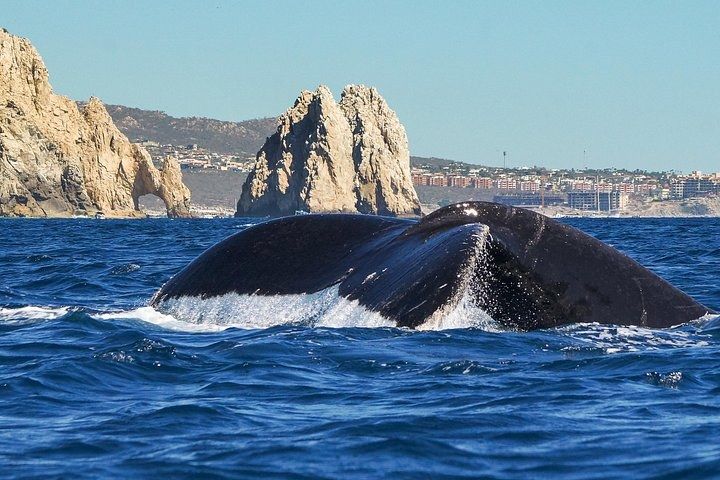
The state's wildlife winter runs across four separate locations. At the southern cape you leave a marina in town and are back within 2 to 2.5 hours, with humpbacks and gray whales the species you are realistically looking at. Gray whales at eye level sit on the Pacific side of the peninsula, a full day of road travel away. Whale sharks belong to the bay at La Paz, with their own season and their own boats. Orcas have a declared observation area of their own up the east coast. From a base in Los Cabos all four are technically reachable, though only the cape trip fits into a morning.
Dates and zones are federal, and they are rewritten every year. SEMARNAT issues a notice naming the authorized observation areas across the state together with the period attached to each; the 2026-2027 document was signed in Mexico City on 22 October 2026 and opens the Cabo San Lucas area, which takes in San Jose del Cabo, as well as Cabo Pulmo National Park, for 15 December 2026 to 30 April 2027. One requirement travels with you to every area on that list: a company has to hold a SEMARNAT authorization for non-extractive use of wildlife before it can take anybody out. Nine whale species at least live in Mexican waters, and SEMARNAT classifies every one of them as at risk.
Being inside an authorized area is not the same as being free to work all of its water. Several areas carry strips and zones where whale-watching boats may not operate, which is why a captain at the cape leaves the postcard scenery quickly and heads out.
- Cabo San Lucas: the port-precinct end of the protected-area polygon is closed to the activity, and a 2-kilometre circle around the Arch sits inside that closure
- Cabo San Lucas: a second closure runs as a 1-kilometre band down the polygon's eastern edge, heading seaward from Punta Ballenas
- Both Cabo zones are restricted on account of the volume of boat traffic moving through them
- Cabo Pulmo and Los Frailes: a 3.5-kilometre coastal strip closed to whale-watching boats
- Every area in the notice: the activity cannot be run from a jet ski, a kayak, a canoe or a paddle-powered inflatable
| Trip | Where | Season window | From Los Cabos | Boat |
|---|
| Humpbacks and other species off the cape | Cabo San Lucas Flora and Fauna Protection Area, 3,996.04 ha with 3,787.99 marine, plus Cabo Pulmo National Park, 7,111 ha and roughly 99 percent marine | 15 December 2026 to 30 April 2027, peak January to March | Marina departure in town | Luxury catamaran or smaller boat, 2 to 2.5 hours |
|---|
| Gray whales in the Pacific lagoons | Pacific side of the peninsula | Fixed departure dates in February and very early March | 05:00 to 19:00 day, about five hours of driving each way | Road transfer plus up to 3 hours on the water |
|---|
| Whale sharks in the bay to the north | La Paz | October through May, with a record of mid-season suspension | 10-hour day with hotel pickup and drop-off | Boats capped at 36 feet, groups of five in the water |
|---|
| Orcas in the declared observation area | El Sargento and La Ventana, 110,906.06 ha, extending 10 nautical miles beyond Isla Cerralvo | Set by the same annual federal notice; confirm for your own dates | At least a six-hour commitment | Permitted boats only; getting in the water is limited to a pilot scheme with a 24-boat daily cap |
|---|
Humpbacks off the cape, 2 to 2.5 hours from the marina
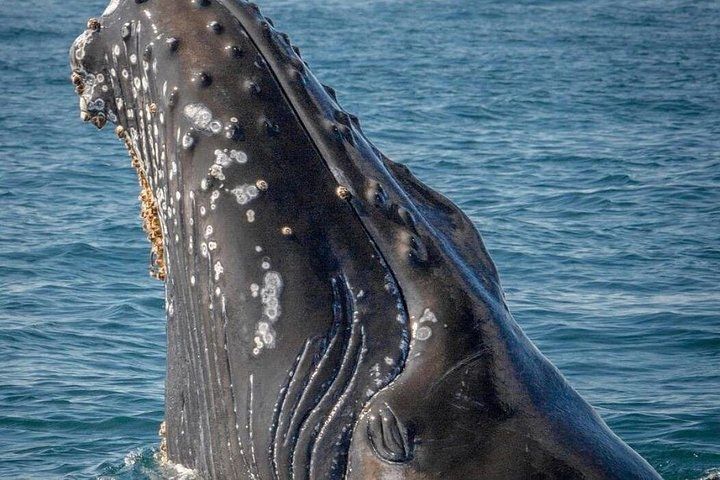
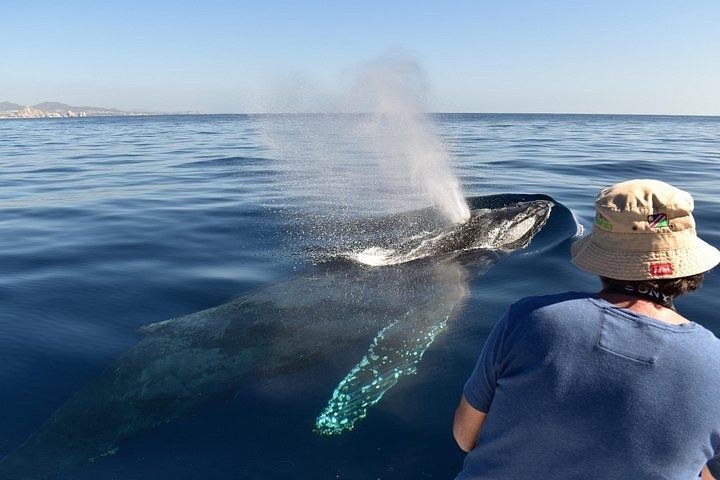
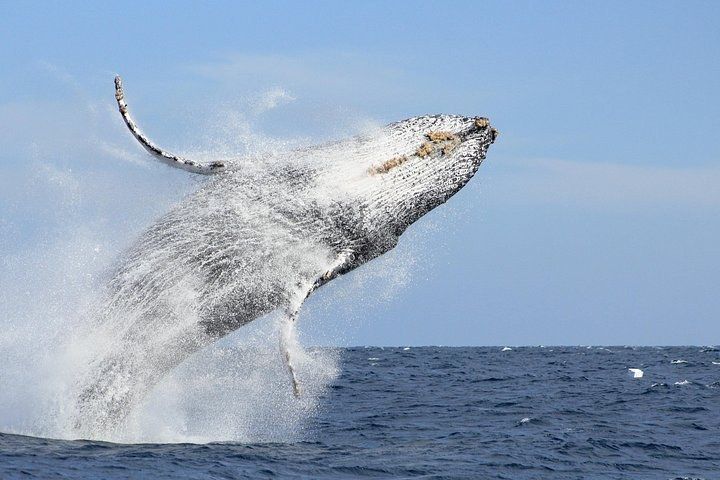
Two species account for nearly everything seen at the cape, the humpback and the gray; blue, fin and orca turn up far less often. The animal you are most likely to watch is large and slow to reveal itself: a humpback runs to about 60 feet and up to roughly 40 tons, females bigger than males, and lives about 80 to 90 years. Males sing on the wintering grounds and stay more or less in one place while they do it, which is the single reason a hydrophone changes the trip. There is one situation in which Mexican rules let the engine go silent, a hydrophone in use; otherwise it idles in neutral.
The boat works at a legal distance, and that shapes what the 2.5 hours feel like. NOM-131-SEMARNAT-2010 sets the floor at 60 metres for a vessel under 10 metres and 80 metres for anything medium or large. A boat waiting its turn holds 240 metres off, no more than four boats stay around one whale or group at a time, each turn ends at 30 minutes, and speed inside the observation area stays under 5 knots, with about 2 knots as you enter. Expect long stretches of holding position while the crew reads the surface.
Take the earliest departure you can get. The official Los Cabos tourism board's own advice is that early trips find calmer water and softer light, and calm water decides how much you see when the hull cannot come closer than 60 to 80 metres. Keep the afternoon of the same day free as a spare slot.
The cape leg of a Baja week
For the cape leg of the week, book the Humpback Whale Watching Tour in Cabo San Lucas: 2.5 hours, from $99, rated 4.9 ★ (1065 reviews). A marine biologist guides it, bottled water and marine park fees are covered, and hotel pickup is not, so plan your own way to the meeting office at Local A-20 inside the Tesoro Hotel at the marina.
★ 4.9/5 · 1,065 reviews
Magdalena Bay vs Cabo whale watching: when the long drive earns its place
The Pacific lagoon gray whale trip out of Cabo San Lucas is a day of road travel with a boat ride in the middle. The schedule runs 05:00 to 19:00, roughly five hours of driving each way for up to three hours on the water, on fixed dates in February and very early March that sell out. Add it only if close-quarters gray whales are the actual reason for the holiday and your dates already sit in that window. Book the departure date weeks ahead.
The cape trip is a different animal in a different format: 2 to 2.5 hours afloat in water where humpbacks are the common sighting during the January to March peak, bookable for any morning of your stay. Many listings blur the two, which is how visitors arrive at a town marina expecting lagoon-style encounters. Do the cape boat first, then decide whether you want the long day as well.
Dates that are fixed in early December or late April are not automatically wasted. For 2026-2027 the cape is authorized through 30 April 2027, a fortnight past the finish date many calendars still print. Before 15 December dedicated whale-watching trips cannot be sold, so an arrival in the first half of December means buying a coastline outing and treating a blow as luck.
Whale sharks at La Paz, October through May
Swimming with whale sharks is a La Paz activity, not a Cabo one, and it runs on its own calendar from October through May. The rules are specific to it: boats are capped at 36 feet and groups in the water at five people, and the activity has been suspended mid-season in the past. Treat it as the winter add-on it is, confirm it is running before you build a day around it, and remember that no legal trip anywhere at the cape puts you in the water with whales, since swimming and diving are prohibited during whale observation.
From a Los Cabos base the practical version is a single long day with transport included. La Paz Whale Shark Snorkeling Tour and Lunch From Los Cabos runs 10 hours, from $259, rated 4.9 ★ (1141 reviews), with wetsuits, use of snorkelling equipment, a professional guide, beverages, freshly prepared classic Baja-style fish tacos and hotel pickup and drop-off; gratuities and towels are not included. Put it on a different day from your cape boat trip rather than trying to stack both.
Orcas up the east coast, inside a declared area
The orca zone is the largest piece of searchable sea in this comparison by a wide margin. The declared observation area off El Sargento and La Ventana measures 110,906.06 hectares and pushes its seaward limit 10 nautical miles past Isla Cerralvo, against 3,996.04 hectares at the cape of which 3,787.99 are marine. Orcas remain a rare sighting on any boat in Los Cabos, so nobody should plan a week around them.
No other Mexican state legalized swimming with orcas before this one, and the permission it granted is narrow: La Ventana and nowhere else, inside a pilot scheme that lets 24 boats work per day. Reaching it from Los Cabos is a six-hour commitment at minimum. A pilot authorization is not a settled rule, so check that it covers your own dates instead of assuming it is live.
Building the week from a base in Los Cabos
Stay in one place and travel out. Los Cabos puts the cape boats, the corridor beaches, Cabo Pulmo and the La Paz day trip within reach of the same hotel, and moving base mid-week costs you a boat morning. Moving between the two towns without a car is cheap and constant: the corridor bus charges between 2 and 3 US dollars depending on the exchange rate and takes approximately one hour from end to end, while taxi vans work 24 hours, red and yellow ones out of San Jose del Cabo and blue and green ones out of Cabo San Lucas.
Put the boat days at the front of the trip. If a tour blanks, the only thing worth having is an operator whose written terms give you a repeat trip, and that is useless if you sail on your last morning.
- Day 1: arrive and get to the marina area; identify the office you will check in at the next morning
- Day 2: first morning departure at the cape, on a boat carrying a hydrophone, with a marine biologist aboard
- Day 3: keep it loose as the backup boat slot, with the corridor beaches or the San Jose del Cabo estuary, a state ecological reserve since 8 October 1993, as the fallback
- Day 4: the La Paz whale shark day, 10 hours with hotel pickup and drop-off
- Day 5: Cabo Pulmo, where the reef is approximately 20,000 years old and holds eleven of the fourteen reef-building coral species reported for the Gulf of California; life jackets are compulsory in the reef zones, one guide covers ten visitors, and you keep 2.5 metres off rock and coral
- Day 6: Sierra La Laguna Biosphere Reserve inland, 112,437 hectares decreed on 6 June 1994, with 694 plant species, 79 of them endemic, 74 recorded bird species and 40 mammal species
- Day 7: a second cape departure for the species you missed, or the Pacific lagoon day if you are travelling in February or very early March
Questions people ask
Can I fit all four Baja California Sur experiences into one week?
Three fit comfortably from a Los Cabos base: the cape boat trip at 2 to 2.5 hours, the La Paz whale shark day at 10 hours, and a reef or inland day. The Pacific lagoon gray whale trip is the one that consumes a whole day, 05:00 to 19:00 with about five hours of driving in each direction. The orca area is at least a six-hour commitment and orcas are a rare sighting, so it is the first thing to drop.
Does the whale-watching season start on the same date everywhere in the state?
The authorized periods are listed area by area in the SEMARNAT notice, which is reissued each year. The 2026-2027 document, signed in Mexico City on 22 October 2026, gives the Cabo San Lucas area, San Jose del Cabo included, and Cabo Pulmo National Park an identical window of 15 December 2026 to 30 April 2027. If your plans involve another area of Baja California Sur, read the current notice for that area rather than assuming the cape dates apply.
How do I check the boat I am paying for is authorized?
Start with the flag. SEMARNAT hands every authorized company a new one each season, numbered in the bottom right corner for the year, and it has to fly for the whole time the boat is whale watching. Next, look for the official identifying marker that authorized vessels keep in a visible place. Then listen: the operator has to brief passengers on expected behaviour before the trip starts and to display the rules on signage, so a departure with no briefing is a warning in itself. Boats working without a permit are kept about 800 feet off the animals.
Can I swim with whales anywhere in Baja California Sur?
Not with whales. Whale observation shuts out fishing, diving, swimming, water-skiing and parasailing while it is under way, and getting into the water with a whale is illegal at Cabo. The state did legalize swimming with orcas at La Ventana only, under a pilot scheme capped at 24 boats a day and six hours or more from Los Cabos. In-water time with whale sharks is a separate La Paz activity running October through May.
Does the kind of boat change from one area to another?
It does, and it is worth matching to the day you want. At the cape you choose between a luxury catamaran and smaller boats on 2 to 2.5-hour departures from the marina. At La Paz the whale shark boats cannot exceed 36 feet, and in-water groups are limited to five. The Pacific lagoon trip is mostly a road transfer with up to three hours afloat at the end of it, and paddle craft and jet skis cannot be used for whale watching anywhere.
Read also