In shortA photo safari here works inside fixed limits: a permitted boat holds 60 to 80 metres off a humpback, four boats maximum stay with one group, and the turn ends at 30 minutes. Bring a mid-range zoom instead of a long lens, use Shutter Priority at 1/1000 second with ISO on Auto and a high burst rate, and take an early morning departure for calmer water and softer light.
60 to 80 mclosest permitted approach
30 minutesmaximum with one whale
1/1000 sshutter for moving wildlife
18 fthumpback fluke width
What a whale watching photo safari in Los Cabos can actually deliver
The framing is fixed before you lift the camera. Your subject distance is written into NOM-131-SEMARNAT-2010: 60 metres is the floor for a hull under 10 metres and 80 metres for anything medium or large, so a permitted boat in Los Cabos shoots from somewhere inside that span depending on which vessel you booked. Four boats at most may stay around the same whale or group, the turn is capped at 30 minutes, and any boat queueing for its slot sits 240 metres back. Plan on whole-animal pictures with water and sky around them.
The approach geometry also decides your angle. The permitted approach line is a diagonal from the whale's rear quarter, run parallel to the course the animal is already swimming, with a head-on approach ruled out, at about 2 knots on entering the observation area and under 5 knots once inside it. That puts you behind and to one side for most of the encounter, so rear-quarter blows, backs and fluke-ups are the realistic frames. A singing male is the exception worth hoping for: a complete song runs 7 to 30 minutes and singers stay roughly in one place while they perform, which can hand you most of the 30-minute window on a single patch of water.
Pictures of a whale with the Arch behind it do not exist, whatever the marketing suggests. Under the 2026-2027 federal notice the water you would need for that shot is shut to whale watching: the northern part of the protected-area polygon inside the port precinct, a 2-kilometre zone drawn around the Arch of Cabo San Lucas, and a 1-kilometre strip down the eastern boundary running seaward from Punta Ballenas. Shoot Land's End as a transit at the start or the end of the trip and keep the whale work for the open water beyond the closures.
- A bushy blow 10 to 16 feet high, usually the first thing anyone sees
- The back and dorsal as the animal rolls through
- A tail lifted vertical on a deeper dive, flukes up to 18 feet across
- Pectoral slapping and lobtailing, the two most repeatable surface behaviours
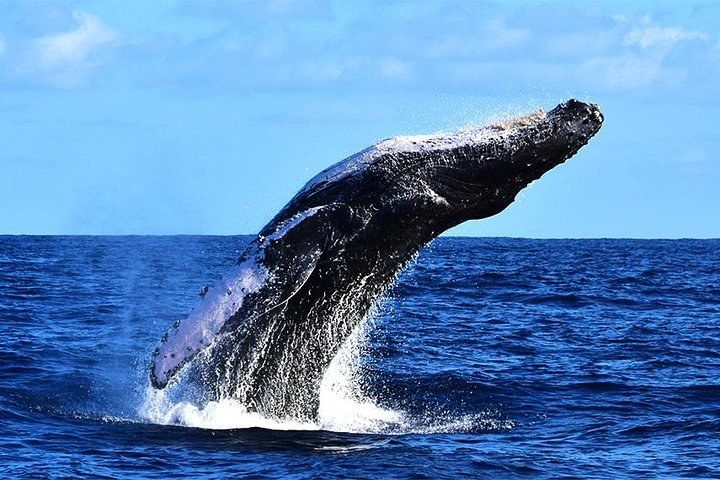
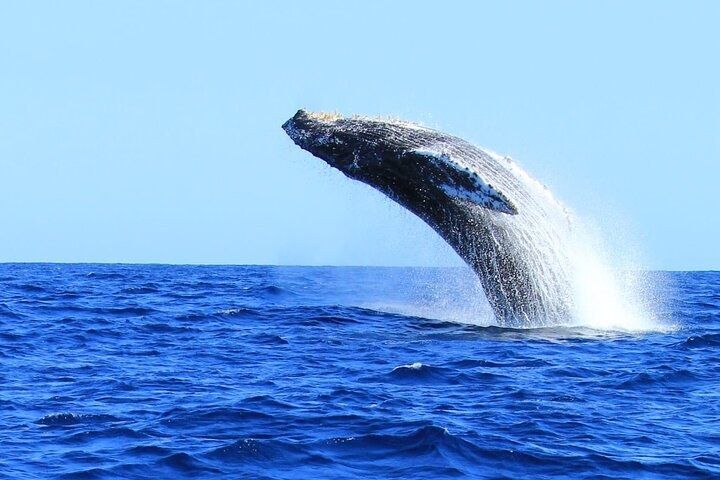
- Breaching and spyhopping, which you cannot plan for
- Logging, an animal lying quietly at the surface, which gives you time to compose
Lenses, settings and focus on a working deck
Take a mid-range zoom and leave the long telephoto at the hotel. At 60 to 80 metres an adult humpback running to about 60 feet already fills a usable amount of frame, and the flukes alone reach 18 feet. A long lens on a small hull gives you a field of view so narrow that you spend the surfacing hunting for the animal rather than shooting it, and a blow lasts only seconds. A zoom also lets you pull wide when something lands closer than expected, or when the mountains and the rail make the better picture. Decide the lens on shore and keep it on the body for the whole 2 hours.
For the exposure, use the US National Park Service's benchmark for moving wildlife: Shutter Priority at 1/1000 second with ISO left on Auto, which holds sharpness without a tripod. Set the burst rate high before you step aboard, because the first blow will not wait while you hunt through a menu. The same guidance is worth following on sequencing too: take an early frame as soon as the subject appears, then keep shooting as the situation develops instead of waiting for the one perfect moment.
Focus wants to be continuous, with a wide zone rather than a single point, because the blow appears somewhere you were not looking. Pre-focus on the horizon line before the boat settles, so the lens starts its search from roughly the right distance instead of racking out from minimum. Bright water and a dark animal will push a matrix meter low on the whale, so expect to open up a little and watch that the white of the blow keeps some texture.
The National Park Service's other piece of advice, keeping the sun behind you, is harder on a boat because the captain chooses the heading and the whale chooses its line. Work it by choosing where you stand: take the rail position that puts the light over your shoulder when the boat holds position, and treat a backlit blow as a deliberate picture rather than a mistake, since the spray lights up from behind.
Room on the rail, 16 travellers maximum
A crewed luxury catamaran capped at 16 travellers gives you a steady deck and a rail position you do not have to fight for, which is what a 1/1000 second burst needs.
★ 4.6/5 · 151 reviews
The best light for whale photos in Los Cabos
Two usable light windows exist, and the official Los Cabos tourism board names both: softer light with calmer seas on the early departures, low, warm light on a sunset trip. Take the first morning slot as your default. Flat water is what keeps a 1/1000 second frame clean, lets you stand without fighting the deck, and makes it possible to read the surface for the next blow. Book the late slot only if the photographs are the entire reason you are on the boat and you know you do not get seasick.
Avoid the middle of the day for a camera. Solar noon falls at 12:29 on 15 January and 12:34 on 15 February, which puts the sun high and hard over the water, bleaches the blow and fills the frame with glare off the swell.
If you do go late, the month matters more than the hour. On 15 December civil twilight ends at 18:02, so a 2-hour evening departure in that part of the season finishes in the dark with very little shooting time; by 15 February twilight runs to 18:39 and by 15 April to 19:03, which is when the late light becomes worth the rougher water. Figures come from the US Naval Observatory for the cape.
| Date | Sunrise | Sunset |
|---|
| 15 December | 06:53 | 17:37 |
|---|
| 15 January | 07:03 | 17:56 |
|---|
| 15 February | 06:52 | 18:16 |
|---|
| 15 April | 05:59 | 18:40 |
|---|
When a whale surfaces with no warning
Nobody can anticipate a breach, but the sequence around it is predictable. A bushy blow 10 to 16 feet high is the cue, then the back rolls through, and on a deeper dive the tail comes up to vertical. Keep the camera at your eye and the burst running through the whole surfacing instead of stopping to check the back of the screen. Reviewing frames is what loses the fluke-up.
Aim where the animal is going. For a whale on the move, lead ahead of the last blow along the line it was already swimming, which is also the line your captain must follow on the diagonal. For a singer, hold on one patch of water and wait. NOAA's figure of four to six minutes for a deep dive comes from feeding grounds at Stellwagen Bank rather than the Mexican wintering grounds, so treat it as a rough sense of scale and keep watching after you think the whale is gone.
When something does launch, keep the shutter down through the re-entry. The splash frames are usually the ones people keep, and they are the easiest part of the sequence to catch because the animal is already committed. Shoot some wider frames on purpose as well: the rail, the other passengers looking the same way, the sierra behind the marina on the run home.
Bracing, spray and the rail you share
Brace low and stay out of the bow, which the CDC identifies as the area of maximum motion on any vessel. Put a hip against the rail, feet apart, knees loose, elbows tucked into your ribs, and let your posture move with the boat rather than resisting it. A tripod or monopod is useless here and gets in other people's way. Between bursts, look at the horizon: the CDC credits a visual horizon reference with some protection against motion sickness, and names visual scanning as something that makes it worse, which is exactly what two hours in a viewfinder amounts to. If the boat has an open bar, leave it until the cards are full, because alcohol increases motion sickness.
Salt spray does most of its damage on the transit, not while the boat is holding position at 60 to 80 metres. Keep the cap on and the lens pointed down during the run out, use a hood, and carry one dry microfibre cloth sealed in a dry bag rather than one that is already damp in your pocket. Never wipe dried salt off a front element on deck; blow or rinse first, dry later. Deal with the body properly that evening instead of mid-trip.
Rail etiquette on a small boat comes down to a few habits. Call sightings by clock position so everyone can find them, keep the lens inside the line of the rail, and crouch if you have the front spot. No flash. Put bags flat on the deck, since anything propped against the rail slides off. When the boat repositions, move round the stern instead of cutting in front of someone mid-burst, and give the people shooting on phones the first minute of an encounter, since the whale stays in view and the 30-minute clock is shared by everyone aboard.
Back up the same day. Copy every card to two separate destinations the evening of the trip, label them by departure, and do not reformat anything until both copies are verified. Marine humidity and a second boat day the following morning are how people lose a fluke-up they never looked at.
Which departure and boat suit photography
For most photographers the pick on this site is Cabo Whale Watching: Female Crew, Guaranteed Sightings, Photos, 2 hours, from 1,680 pesos and rated 5.0 ★ (2144 reviews). Digital photos of the tour are included, which means you leave with frames shot from the crew's position whatever your own hit rate turns out to be, and the captains and guides are biologists, so you know which behaviour you are pointing at. The whale warranty gives a second tour at no cost if the first finds no whales, and a second tour is also a second light slot. The boat sits at dock zero in front of the Breathless hotel, guides wait outside the dock in green shirts, and Breathless is the easiest reference for a taxi or a map app. The dock fee, gratuities and the optional shuttle are not included.
If footing and rail space matter more to you than a free image set, take the Luxury Whale Watch Cruise to The Arch Los Cabos, 2 hours, from $95 and rated 4.6 ★ (151 reviews). It is a crewed luxury catamaran with a maximum of 16 travellers, which is the number that decides how much rail you get, and a wide deck is a steadier shooting platform than a small hull. A live guide in English, open bar and life jackets or safety equipment are included; transport from Quivira, Hard Rock, Rancho Grand Solmar and Nobu, and the dock fee, are not. The Arch passes as scenery at the start or the end, which is where your Land's End frames come from.
On timing, book the earliest departure you can get and keep a second day in reserve. Both trips run 2 hours, so a morning on one date and a late slot on another is a realistic plan inside the authorized season, which for 2026-2027 runs from 15 December 2026 to 30 April 2027, with the peak between January and March. Put a dedicated evening attempt in February or later, when there is still usable light after 18:00.
- Photos included in the service: the all-female-crew trip, 2 hours, from 1,680 pesos
- Capped group and a stable deck: the Arch luxury cruise, 2 hours, from $95, maximum 16 travellers
- Softest light and flattest water: the first morning departure
- Low evening light: a late departure, booked from February onward
- Worst light of the day: anything leaving around solar noon, 12:29 in mid-January
Questions people ask
Can I get good whale photos on a phone?
The official technique guidance, from the US National Park Service, is written for cameras with interchangeable lenses, and no primary source covers phones from a boat. In practice, shoot video rather than stills, keep the horizon level, brace your forearms on the rail and resist pinch-zooming, because digital zoom at 60 to 80 metres throws away the only detail you have. Pick a trip where photos are part of the service if the images matter to you.
Can I ask the captain to go closer for a better frame?
No, and a crew that agrees is breaking the rules. The numbers in NOM-131-SEMARNAT-2010 are not the captain's to negotiate: 60 metres minimum for a hull under 10 metres, 80 metres for a medium or large vessel, 240 metres while you queue for a turn, and 30 minutes once you get it. Nobody can hunt up a subject for you with sonar or an echo sounder either, since that is prohibited. An unpermitted boat is held roughly 800 feet back, a focal-length problem no lens in your bag will solve, so a cheap unauthorized ride cannot deliver what it advertises.
Can I take underwater or in-water shots of the whales?
There is no legal way to put a housing in the water beside a whale here: swimming with whales is illegal in Cabo, and fishing, diving, swimming, water-skiing and parasailing are all prohibited while whales are being observed. A low shooting platform is out as well, since jet skis, kayaks, canoes and paddle-powered inflatables are barred from whale watching entirely. Everything you shoot is from the deck of a permitted boat.
Which species will I actually be photographing, and when?
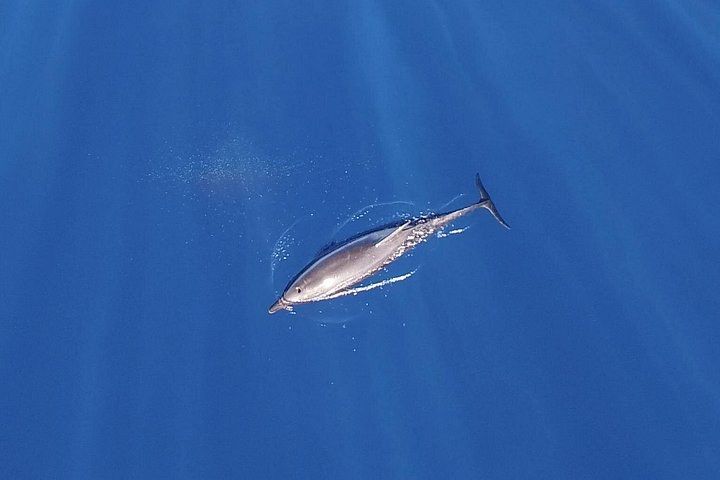
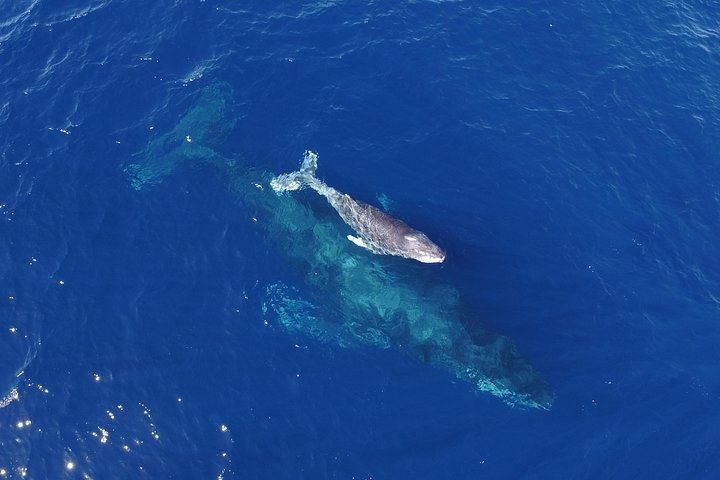
Plan your frames around humpbacks and gray whales, the two species seen most often in Los Cabos; blue, fin and orca turn up far more rarely. The authorized period for 2026-2027 at the cape is 15 December 2026 to 30 April 2027, and the peak runs January to March. For mother and calf frames, aim for mid-January to the end of February, when newborns measuring about 13 to 16 feet are in the wintering grounds.
Do any of the tours include the photos?
One does. The all-female-crew trip, 2 hours from 1,680 pesos and rated 5.0 ★ (2144 reviews), lists digital photos of the tour as included along with bottled water and biologist captains and guides. On the Arch luxury cruise, the inclusions are the live guide in English, open bar and safety equipment, with the dock fee and transport from certain hotels not included.
Read also